Best cold email software, and the part it does not solve
Cold email software has become very good at the mechanics: warmup, inbox rotation, sending, and deliverability. That makes the bottleneck the part the software does not touch: who you email, why now, and what you say.
Published . Reviewed for freshness, claim boundaries, and current sales signal logic on .
What is the best cold email software?
The best cold email software handles sending infrastructure, deliverability, warmup, and sequence management. It is essential once you know who to contact and what to say. max sits upstream: it reads buying signals, applies best-fit rules, prioritizes accounts, and drafts the message, then the sender delivers it reliably.
 Where max fits
max is a standalone AI sales agent. It reads ICP rules, account context, and buying signals, then recommends the next move and prepares a campaign packet for human approval. It decides and drafts; it is not the sender itself.
- Best overall: Instantly
- Unlimited inboxes, large warmup pool, and a built-in lead database cover most outbound needs.
- Best for deliverability at scale: Smartlead
- Unlimited mailboxes, free warmup, and inbox rotation built for high-volume sending teams.
- Best for agencies: lemlist
- Multichannel sequences, client workspaces, and personalization make managing many accounts simpler.
- Best value: Saleshandy
- Unlimited email accounts and free warmup on paid plans at a low monthly floor.
- Best decision layer: max
- Signal-led prioritization and draft quality that tells your existing sender who to contact and why now.
The tools, compared
Most of these solve a different job, so the right setup is often a stack. Each row is what the tool is genuinely best at, when to choose it, and what to watch for.
| Tool | Best for | Choose it when | Watch out for |
|---|---|---|---|
| from $69/user/mo | Cold email plus LinkedIn outreach with deliverability control. | You want multichannel cold outreach, not email-only sending. | Per-user credit caps on the entry plan. |
| from €190/mo | Decides who to email and why now, then drafts the copy. | Targeting and message quality are the gap, not sending. | Not a sender; pairs with a cold email tool, and no free trial. |
| from $47/mo | Unlimited inboxes, warmup, and sending at scale. | High-volume cold email is the core job. | Headline price is sending-only; lead data billed separately. |
| from $39/mo | Inbox rotation and deliverability for high volume. | Deliverability at scale is the priority. | Sourcing and verification are paid add-ons. |
| from $25/mo | Budget cold email with unlimited contacts. | Scaling volume on a tight budget. | Cheapest price is annual-billing only. |
| from $31/mo | Multichannel sending with strong personalization. | Email plus LinkedIn sequencing for SMB. | Enrichment is pay-per-success credits. |
| from $49/user/mo | Contact database with built-in email sending. | You want data and sending in one tool. | Credit model is the real cost. |
| from $49/mo | Reliable sending with auto-warmup. | Deliverability and simplicity matter most. | Priced by emails sent, not contacts. |
| from $29/mo | Simple cold-email sequencing for solo sellers. | You want a proven, no-frills sequencer. | LinkedIn and dialer sit on pricier tiers. |
| usage-based | Pay only for what you send. | Variable volume month to month. | Usage pricing makes monthly cost hard to predict. |
| from $49/mo | Multichannel sequencing with an AI SDR layer. | You want email plus LinkedIn plus calls. | Cost balloons once you add channels. |










Feature comparison
The capabilities that usually decide the shortlist, at a glance. Figures are the vendors' own published numbers.
| Tool | Warmup | Inboxes | Multichannel | A/B testing | Free trial | Starting price |
|---|---|---|---|---|---|---|
| Overloop | Built-in | Unlimited | Email + LinkedIn | Yes | 14-day | $69/mo |
| max | Not a sender | Not a sender | Decides + drafts | - | No | $190/mo |
| Instantly | Built-in | Unlimited | Email only | Yes | Limited free | $37/mo |
| Smartlead | Built-in | Unlimited | Email + more | Yes | 14-day | $39/mo |
| Saleshandy | Built-in | Unlimited | Email only | Yes | 7-day | $36/mo |
| lemlist | Built-in | Per seat | Email + LinkedIn | Yes | 14-day | $55/mo |
| Apollo | Add-on | Limited | Email + calls | Yes | Free plan | $49/mo |
| QuickMail | Auto-warmer | Multiple | Email + LinkedIn | Yes | 14-day | $49/mo |
| Mailshake | Limited | Per seat | Email + calls | Yes | No | $25/mo |
| Woodpecker | Built-in | Multiple | Email + LinkedIn | Yes | 7-day | $29/mo |
| Reply.io | Built-in | Multiple | Email + LinkedIn | Yes | 14-day | $59/mo |
A closer look at each option
What each tool actually does, who it fits, and the honest trade-off, in the order they appear above.
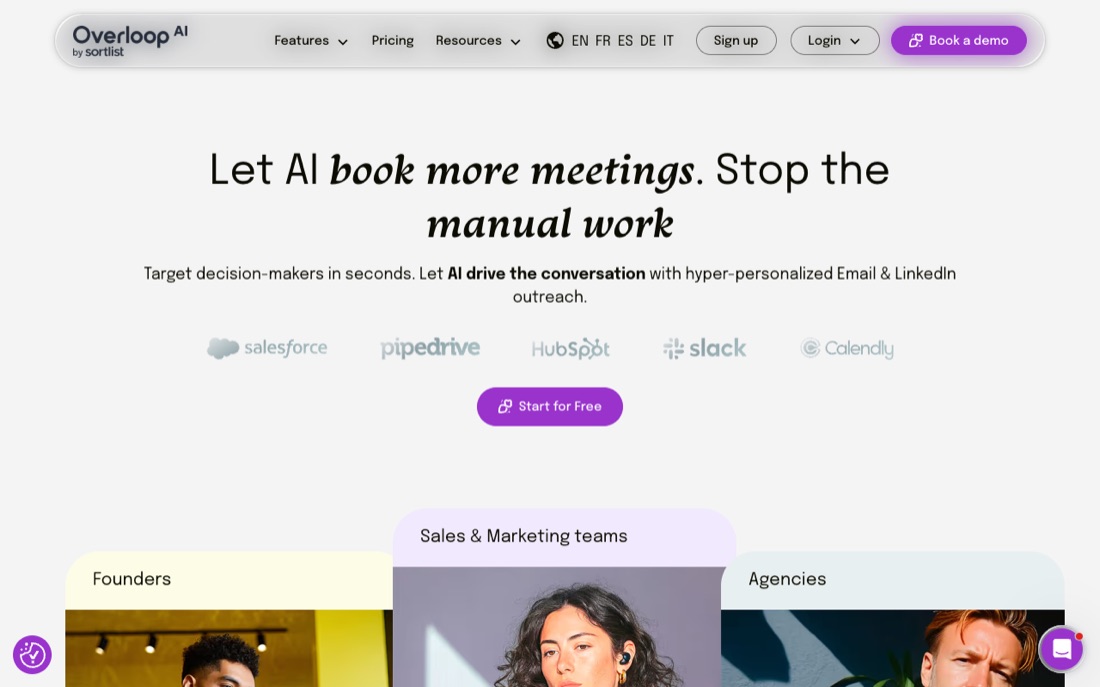
Overloop runs cold email and LinkedIn outbound from one place, so you can build multi-step sequences that mix automated emails with connection requests and messages. It pulls contacts, handles personalization variables, and tracks opens, clicks, and replies inside its own CRM, which suits small sales teams and agencies that want prospecting and pipeline in a single tool rather than stitching a sender to a separate CRM. It is not built around the deliverability-obsessed mailbox rotation and warmup stack that the inbox-spamming specialists push, so very high-volume senders may outgrow it. From $69 per user per month, it fits teams that value combined channels over raw sending scale.
- Runs LinkedIn and cold email outbound from one sequence builder.
- Built-in CRM and pipeline so replies do not get lost.
- Email finder and verification included for sourcing contacts.
- Good fit for solo reps and small teams running multichannel.
- Sending volume and deliverability tooling thinner than dedicated cold email tools.
- No large native warmup pool like Instantly or Smartlead.
- Per-seat pricing adds up for larger teams.
max is a signal-led AI sales agent that sits upstream of your sending tool rather than replacing it. It watches buying signals, decides which accounts are worth contacting and why now, ranks them, and drafts the opening message, then hands that off to whatever sequencer you already run. So it is a decision layer, not a sending engine: it does not do mailbox rotation, warmup, or high-volume dispatch. It fits teams that have a sender they like but waste hours guessing who to email and what to say. Pricing starts at EUR 190 per month with no free trial, billed as a paid product from day one.
- Signal-led prioritization tells you who to contact and why now.
- Drafts quality messages you review before anything sends.
- Human-in-the-loop by design, you stay in control.
- Sits on top of your existing sender as a decision layer.
- Not a sender, you pair it with an email tool to deliver.
- No free trial, paid from the start.
- Newer product with a smaller track record.
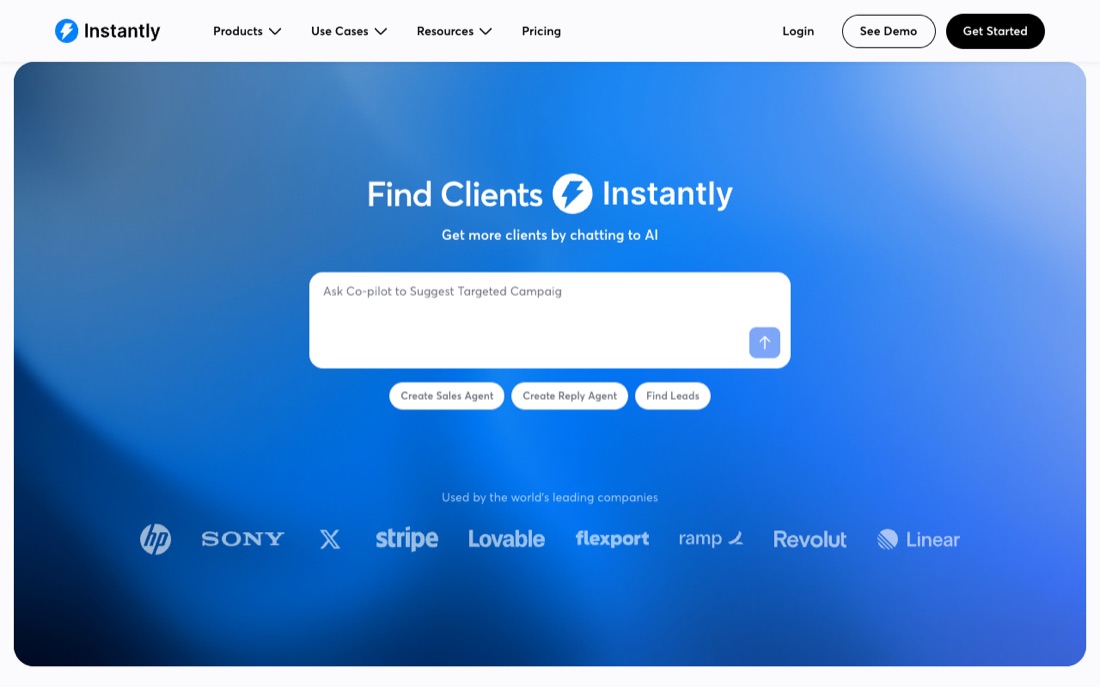
Instantly is built for cold email at volume. It leans on unlimited connected mailboxes, built-in warmup, and automatic inbox rotation to spread sends across many accounts and protect deliverability, which is why high-volume agencies and lead-gen shops gravitate to it. It includes sequencing, a unified inbox, and a B2B lead database, so you can source and send without leaving the tool. The trade-off is that it rewards a spray-heavy motion: the feature set assumes you are sending a lot of email across a lot of domains, and lighter teams running tight, low-volume campaigns may find it more machine than they need. It is one of the better-known deliverability-first senders.
- Unlimited email accounts on paid plans for scaling volume.
- Large warmup pool to protect inbox placement.
- Built-in B2B lead database for sourcing contacts.
- Unified inbox to manage replies across mailboxes.
- Lead database quality varies by industry and region.
- Higher tiers needed to unlock full deliverability features.
- Support response times can lag during busy periods.
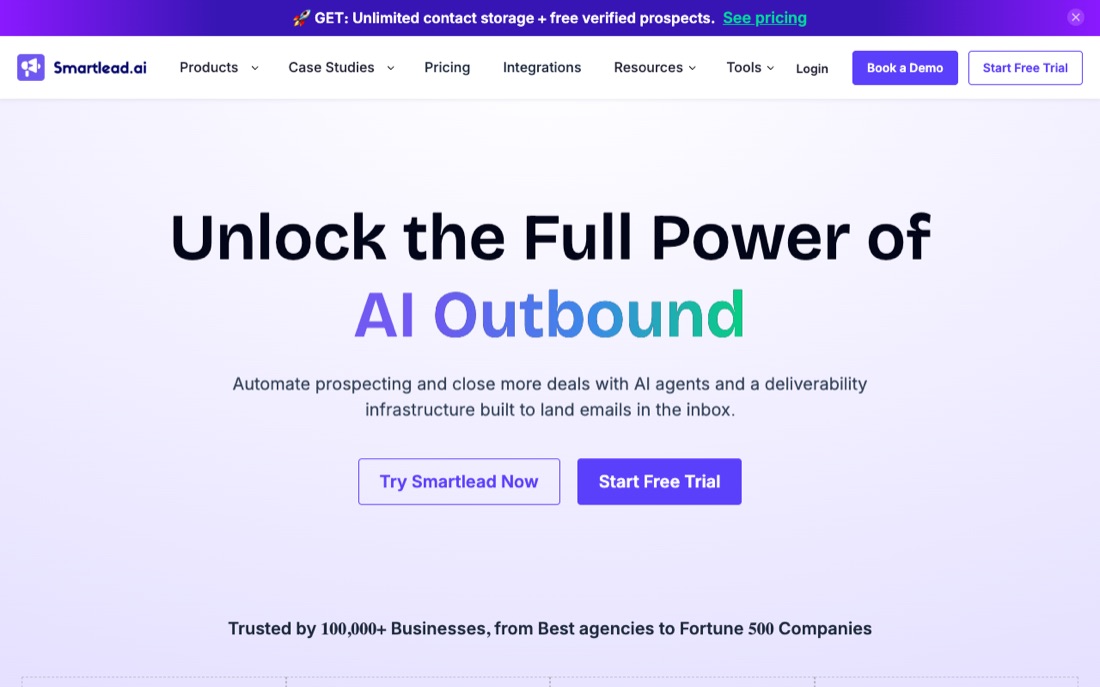
Smartlead is a deliverability-first cold email platform with unlimited mailboxes, automated warmup, and rotation across accounts to keep volume off any single domain. Its draw is the unified master inbox and a strong API, which makes it popular with agencies running campaigns for many clients and with technical teams that want to wire sending into their own stack. Sequencing and reply detection are solid, and spintax-style variation helps avoid identical sends. The trade-off is interface polish and a learning curve: it is built for operators who already understand inbox infrastructure rather than first-time cold emailers, and the value shows mostly at scale. It is a frequent pick for high-volume sending operations.
- Unlimited mailboxes and warmup included on paid plans.
- Automatic inbox rotation spreads volume to protect sender reputation.
- Master inbox and API suit agencies and high-volume senders.
- Subsequences let you branch flows by reply behavior.
- Interface has a learning curve for new users.
- No native lead database, you bring your own lists.
- Add-ons can raise the effective monthly cost.
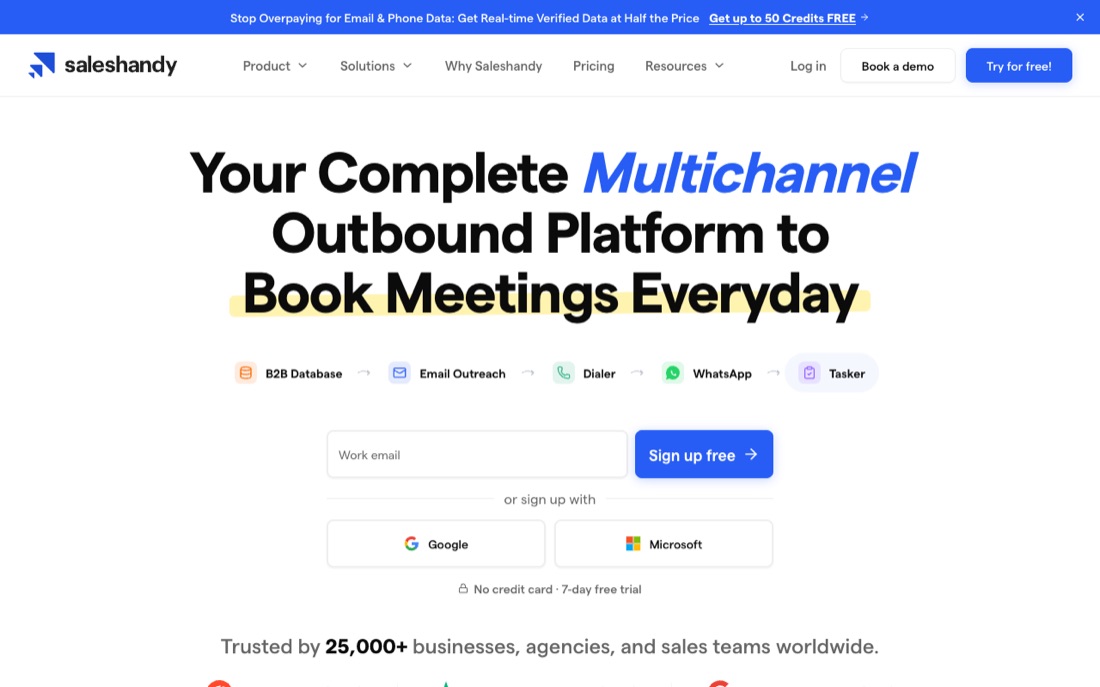
Saleshandy is a cold email sender that combines sequencing, automated warmup, and mailbox rotation with a built-in B2B lead database, so you can find prospects and email them in one workflow. It supports unlimited email accounts on its sending plans, reply detection, and A/B testing, which makes it a reasonable fit for SMBs and agencies that want volume sending without paying for a separate data tool. The trade-off is that the all-in-one breadth can mean none of the pieces are best-in-class, and teams with strict deliverability needs sometimes pair it with dedicated infrastructure. It is a solid mid-market option for teams scaling outbound on a budget.
- Unlimited email accounts and free warmup on paid plans.
- Built-in lead finder with a large B2B contact database.
- Low monthly floor makes it accessible for small teams.
- Sequence and reply detection keep follow-ups clean.
- Fewer advanced personalization options than lemlist.
- Lead data accuracy varies by market.
- Reporting is lighter than enterprise-focused tools.
lemlist made its name on personalization, with dynamic images, custom landing pages, and liquid-style variables that go well beyond first-name swaps. It now bundles a lead database, multichannel steps across email and LinkedIn, and its own warmup and deliverability network, so it works as a full sending platform rather than just a creative layer. It fits teams that compete on message quality and reply rates rather than pure volume. The trade-off is cost and complexity: the personalization features are powerful but take effort to use well, and price climbs as you add seats and data. It suits SMBs and agencies that want standout, human-feeling campaigns.
- Multichannel sequences across email, LinkedIn, and calls.
- Strong personalization with custom images and dynamic variables.
- Built-in warmup and a B2B lead database included.
- Client workspaces help agencies separate accounts.
- Pricing climbs once you add multichannel and database access.
- Can feel heavy for teams that only need email.
- Personalization features take time to set up well.
Apollo pairs a large B2B contact database with a built-in sequencer, so you can find prospects, enrich them, and email them without leaving the platform. For cold email specifically it offers sequences, email sending, and basic deliverability features, but its center of gravity is data and all-in-one sales engagement rather than the deep mailbox rotation and warmup that dedicated senders specialize in. It fits teams that want sourcing and outreach in one seat and are sending moderate volumes from a few mailboxes. The trade-off is that heavy senders chasing maximum deliverability often graduate to a specialist sender and use Apollo mainly for the data. It is a strong value pick where data plus sending matters most.
- Large B2B contact database paired with sending in one tool.
- Filtering and intent data help build targeted lists fast.
- Sequences, dialer, and basic CRM bundled together.
- Free tier lets you test sourcing before paying.
- Deliverability tooling weaker than dedicated cold email tools.
- Data accuracy varies and credits can run out quickly.
- Cold email at high volume is not its core strength.
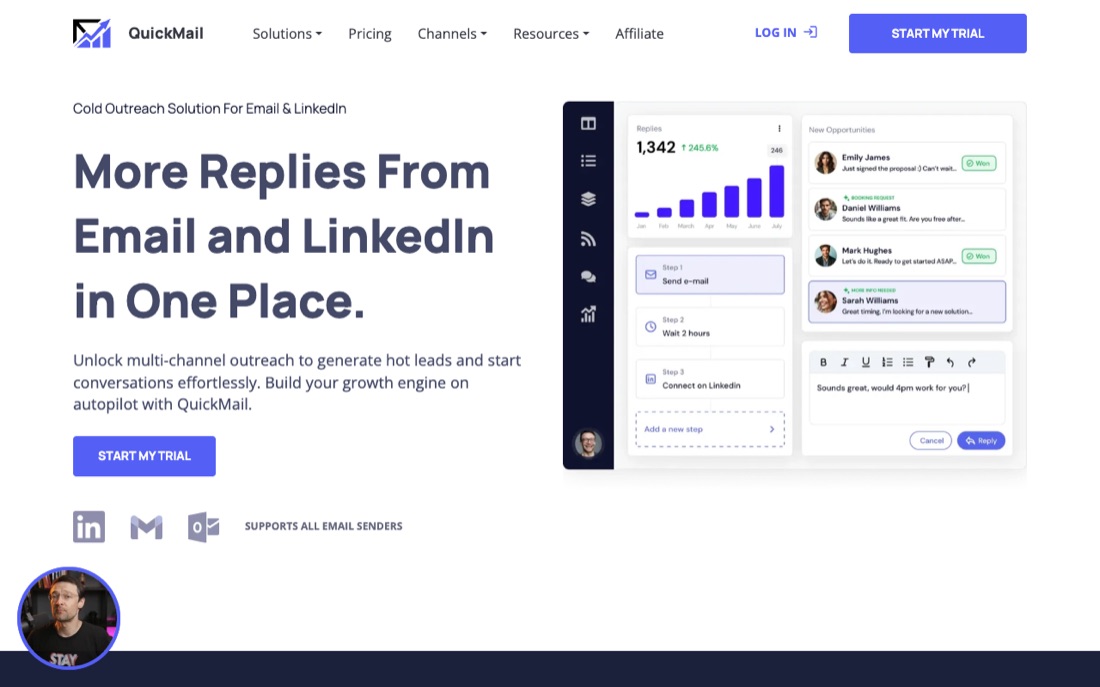
QuickMail is a long-running cold email tool focused on automated sequences, inbox rotation across multiple mailboxes, and its Auto-Warmer network for deliverability. It handles email and a touch of LinkedIn and SMS, with reply detection that pauses prospects who respond. It suits agencies and small teams that want reliable, set-and-forget sending and value deliverability reporting like its MailFlow analytics. The trade-off is a more utilitarian interface and a feature set narrower than the newer all-in-one platforms that bundle large lead databases, so you typically bring your own data. It is a steady, deliverability-minded choice for teams that prioritize inbox placement over flashy features.
- Built-in warmup and inbox rotation across mailboxes.
- Reliable for high-volume sending without throttling reputation.
- Reply detection and CRM-style inbox keep threads organized.
- Solid deliverability focus for a smaller, focused tool.
- No native lead database, you bring your own contacts.
- Interface feels dated next to newer competitors.
- Fewer integrations than larger platforms.
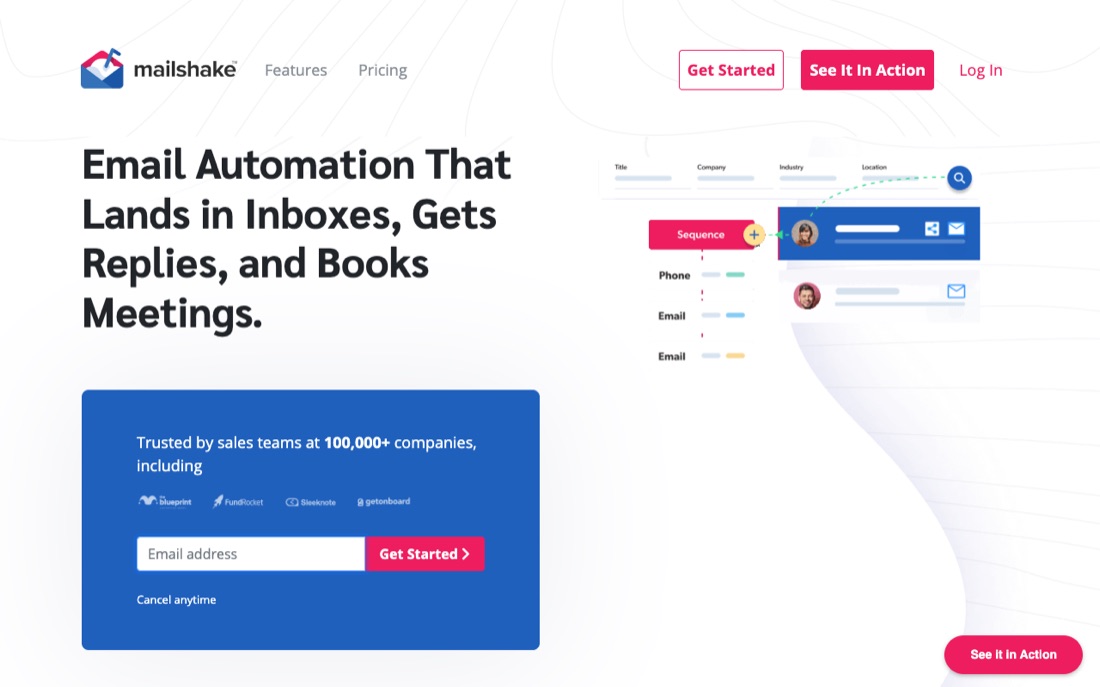
Mailshake is a straightforward cold email and sales engagement tool built around sequences, mail merge personalization, and follow-up automation, with phone and social steps layered on. It is approachable for sales teams and SMBs that want to launch outbound quickly without wrestling with infrastructure, and its lead-catcher and reply management keep responses organized. The trade-off is that it is less aggressive on the modern deliverability stack: warmup and large-scale mailbox rotation are not its headline strengths, so very high-volume senders chasing maximum inbox placement may look elsewhere. It fits teams that want clean, simple multichannel outreach over a deep deliverability toolkit.
- Simple sequence builder that is easy to learn.
- Combines email, social, and phone touches in one cadence.
- Built-in dialer for call follow-ups.
- Good fit for sales teams new to cold outreach.
- Warmup and inbox rotation less robust than Smartlead or Instantly.
- No lead database, sourcing happens elsewhere.
- Higher entry price than some volume-focused tools.
Woodpecker is a cold email tool with a strong deliverability reputation, offering automated warmup, sending across multiple inboxes, and adaptive sending that mimics human patterns to protect domains. It handles sequences, condition-based follow-ups, and reply detection, and it is popular with agencies thanks to features for managing multiple client accounts. It fits teams that care more about consistent inbox placement and clean, controlled sending than about flashy personalization or a bundled lead database, which you usually supply yourself. The trade-off is that it can feel conservative and less feature-packed than the newer all-in-one platforms. It is a dependable, deliverability-first pick for European and agency outbound.
- Adaptive sending and warmup aimed at protecting deliverability.
- Bounce and duplicate detection keep lists clean.
- Agency plan supports managing multiple client accounts.
- Condition-based follow-ups branch on prospect behavior.
- No built-in lead database, you supply contacts.
- Pricing scales with contacts, which can add up.
- Fewer multichannel options than lemlist.
Reply.io is a multichannel sales engagement platform where cold email sits alongside LinkedIn, calls, and SMS in unified sequences. It includes email warmup, deliverability tooling, a B2B contact database, and AI features for drafting and prioritizing outreach, which makes it a fit for sales teams that want one tool across channels rather than a pure email sender. The trade-off is breadth over depth: the platform is large, pricing scales with seats and add-ons, and teams that only need high-volume email sometimes find a dedicated sender simpler and cheaper. It suits SMB and mid-market teams running genuinely multichannel outbound from a single workspace.
- Multichannel sequences across email, LinkedIn, calls, and SMS.
- Built-in contact database and AI assistant for drafting.
- Inbox rotation and warmup support deliverability at scale.
- Suits teams wanting outreach and sourcing in one place.
- Feature breadth makes pricing higher than email-only tools.
- Steeper setup given the number of channels.
- Database and AI quality vary by use case.
These reviews are based on each vendor's publicly documented features, pricing, and positioning as of mid-2026, plus aggregated public ratings from G2 and similar review platforms. We did not run a controlled side-by-side sending test, so treat deliverability claims as vendor-stated capabilities rather than measured results; ratings and feature sets change, so verify current details on each provider's site before buying.
What cold email software does well
Modern cold email tools solve the hard infrastructure problems: inbox warmup, sender rotation, deliverability monitoring, and sequence management at scale. These are real, necessary capabilities. They determine whether your email lands, not whether it should have been sent.
- Inbox warmup and sender rotation
- Deliverability monitoring
- Sequence and follow-up management
- Sending at scale across mailboxes
Where max fits in the stack
max is the layer before the sender. It decides which accounts deserve an email and why now, and drafts a message that references the business situation. The cold email platform then delivers it reliably. Strong infrastructure plus weak targeting still fails; the two are complementary.
- Account selection by fit plus timing
- Why-now reasoning per account
- Drafts for human approval
- A learning loop on which signals earn replies
How this brief was reviewed.
- Freshness
- Updated June 15, 2026. This page was checked for current comparisons language, metadata quality, schema coverage, internal links, and whether the advice still reflects signal-led sales in 2026.
- Editorial review
- Reviewed by max research team. The brief is written from max's sales operating model: best-fit customer profile first, evidence second, human-approved outreach third. It avoids claiming private intent or guaranteed outcomes.
- Method
- This guide uses public product positioning, buyer comparison intent, outbound workflow boundaries, and the jobs each tool is hired to do. Recommendations are framed as decision support for sales teams, not as legal, deliverability, or revenue guarantees.
Questions buyers ask before acting.
Keep the thread.
 vs
vs
Instantly alternatives
The best Instantly alternatives in 2026, compared on price and fit. From cold email infrastructure to multichannel sequencing and signal-led targeting.
- vs

Smartlead alternatives
The best Smartlead alternatives in 2026, compared on price and fit. From cold email infrastructure to multichannel sequencing and signal-led targeting.
Turn intent signals into outbound campaigns
A practical max playbook for turning best-fit customer rules, intent signals, account prioritization, LinkedIn outreach, and email copy into a campaign launch.
The practical test is simple: can the system explain why this specific account deserves a human touch now, using evidence the buyer would recognize?
Try max free