The best Apollo alternatives, compared
Apollo is a popular all-in-one of contact data plus sequencing at a low price. The right alternative depends on your real gap: better data accuracy, compliant EU coverage, deeper enrichment, dedicated sending, or a sharper decision about who to contact and why now.
Published . Reviewed for freshness, claim boundaries, and current sales signal logic on .
What is the best Apollo alternative?
The best Apollo alternatives in 2026 are Clay for enrichment, Cognism and ZoomInfo for stronger data, Instantly and lemlist for dedicated sending, and signal-led tools like Overloop and max when the gap is account selection and campaign quality rather than raw contacts. Teams usually switch for better data accuracy or a sharper outbound motion.
 Where max fits
max is a standalone AI sales agent. It reads ICP rules, account context, and buying signals, then recommends the next move and prepares a campaign packet for human approval. It decides and drafts; it is not a contact database.
- Best overall Apollo alternative: Clay
- Flexible enrichment across many providers plus AI research, so coverage and data depth stay high.
- Best for EU data and compliance: Cognism
- Strong European coverage, GDPR-focused processes, and phone-verified mobile numbers for outbound calling.
- Best for cold email at scale: Instantly
- Built for inbox rotation, warmup, and high-volume sending without burning your sender reputation.
- Best for personalized email sequences: lemlist
- Image and video personalization plus multichannel steps make replies feel hand-written, not blasted.
- Best decision layer on top of your stack: max
- Reads buying signals, prioritizes accounts, and drafts the reasoning so reps act on the right ones.
The tools, compared
Most of these solve a different job, so the right setup is often a stack. Each row is what the tool is genuinely best at, when to choose it, and what to watch for.
| Tool | Best for | Choose it when | Watch out for |
|---|---|---|---|
| from $69/user/mo | LinkedIn plus email outreach when you want a sharper motion than Apollo sequences. | Outreach quality matters more than database size. | Smaller native database than Apollo; bring or connect data. |
| from €190/mo | The decision layer: who to act on, why now, and a campaign packet. | Account selection and timing are the gap, not contacts. | Not a database; decides and drafts. No free trial. |
| from $134/mo | Custom enrichment across 150+ data providers. | You have a technical owner to build workflows. | Dual credit system makes spend hard to predict. |
| Custom | Compliant EU and UK mobile data. | EU coverage and GDPR matter most. | No public price; steep for small teams. |
| Custom | The largest US database with intent. | Enterprise coverage is the priority. | Expensive, multi-year contracts. |
| from $47/mo | High-volume cold email sending. | Email sending at scale is the job. | Sending-only; data billed separately. |
| from $31/mo | Multichannel sequencing with personalization. | Low entry point for email plus LinkedIn. | Enrichment is pay-per-success credits. |





Feature comparison
The capabilities that usually decide the shortlist, at a glance. Figures are the vendors' own published numbers.
| Tool | Database size | Data + sending | Email verification | EU/GDPR data | Free tier | Starting price |
|---|---|---|---|---|---|---|
| Overloop | 450M+ | Yes | Yes | Yes | 14-day trial | $69/mo |
| max | Not a database | Decides + drafts | - | - | No | From $190/mo |
| Clay | Enrichment, not own DB | Enrich only | Via providers | Via providers | Free: 100 credits | $185/mo |
| Cognism | 200M+ | Data only | Yes | GDPR-native | No | Custom |
| ZoomInfo | 235M+ | Data only | Yes | US-first | No | Custom |
| Instantly | 450M+ add-on | Yes | Yes | Cloud | 14-day trial | $37/mo |
| lemlist | 450M+ | Yes | Yes | Cloud | Free trial | $69/user/mo |
A closer look at each option
What each tool actually does, who it fits, and the honest trade-off, in the order they appear above.
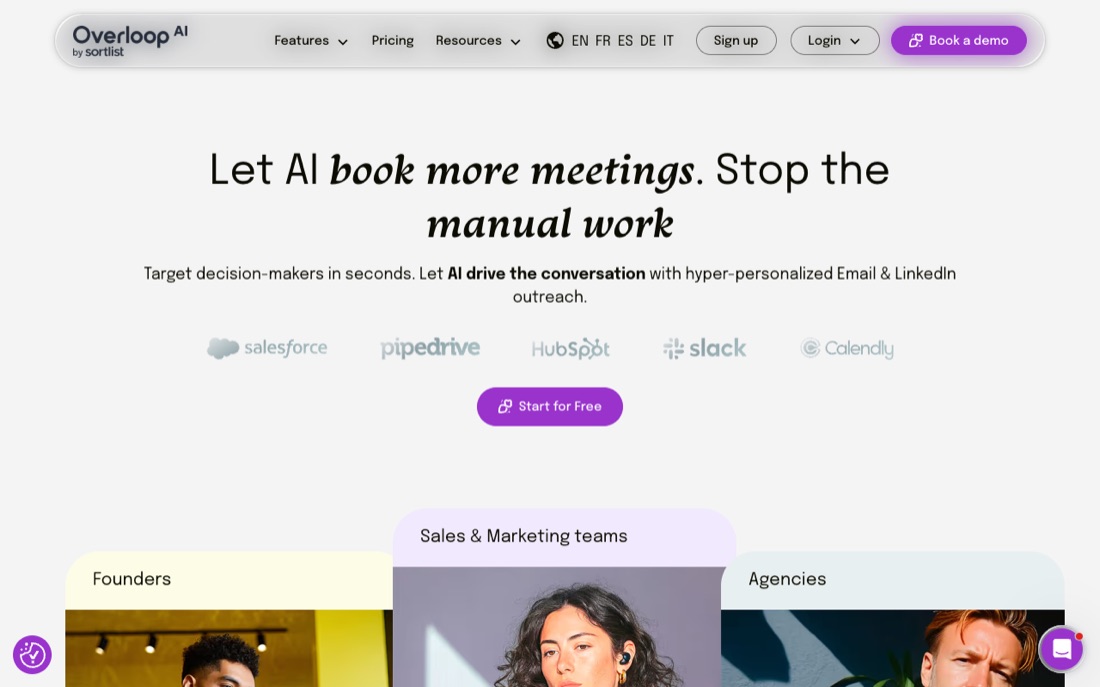
Overloop is an outbound execution tool built around LinkedIn and email in one workflow. If the part of Apollo you actually live in is the sequencer, Overloop is a sharper, more focused alternative: you build multichannel campaigns that mix LinkedIn touches with email steps, and the interface is lighter than Apollo's everything-in-one console. The honest trade-off is data. Overloop's native contact database is much smaller than Apollo's, so most teams bring their own list or enrich from another source. Choose it if your bottleneck is running a clean LinkedIn-plus-email motion, not if you need Apollo's contact volume in the same tool.
- Combines LinkedIn and email outreach in one multichannel sequence
- Built-in CRM and pipeline tracking keeps execution in one place
- AI-assisted sequence drafting speeds up campaign setup
- Data quality leans on connected sources, not a deep native database
- Aggressive LinkedIn automation carries account-safety risk
- Heavier focus on execution than on signal-based targeting
max is a signal-led AI sales agent that sits upstream of where Apollo operates. It reads your ICP and buying signals, prioritizes which accounts are worth attention right now, and drafts campaign packets for a human to approve before anything goes out. It is not a contact database and it is not a sender, so it does not replace Apollo's data or its sequencing. Think of it as the decision layer that tells you who to work and why, then hands you something ready to act on. It fits teams that have enough volume that picking the right accounts is the real problem. Pricing starts at EUR 190 per month, with no free trial.
- Reads buying signals to prioritize which accounts deserve attention now
- Drafts outreach with clear reasoning, not generic templated copy
- Human-in-the-loop by design, so reps approve before anything sends
- Not a contact database; brings no records of its own
- Not a sender; relies on your existing outreach tooling
- Newer and less proven, with no free trial to test first
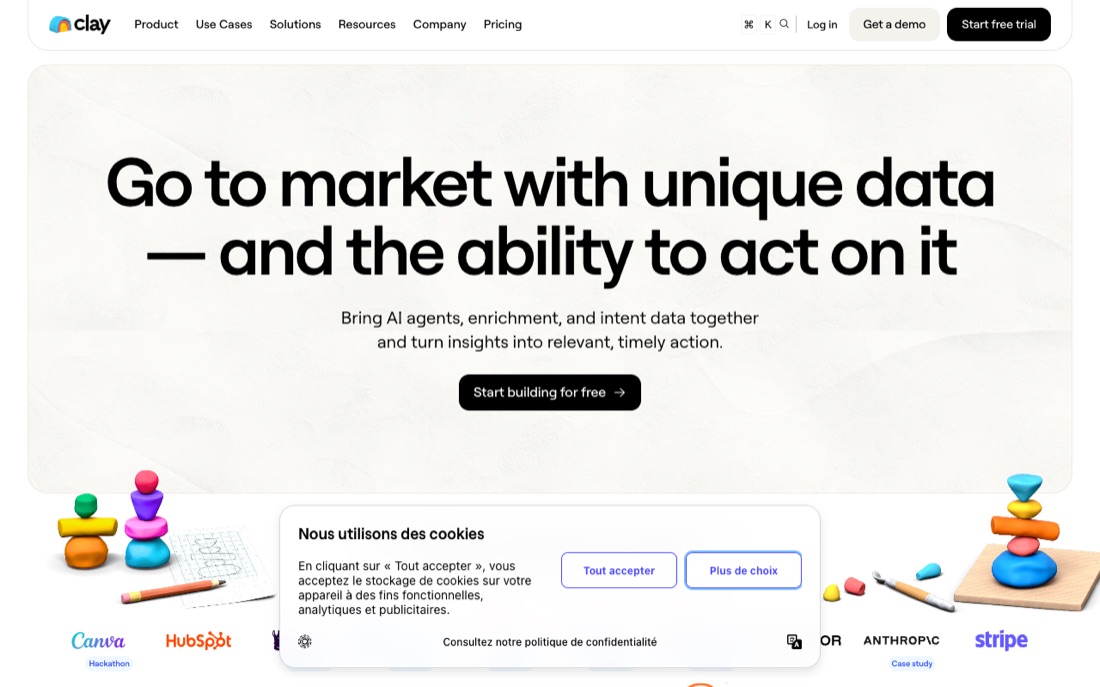
Clay is a data orchestration and enrichment tool. Instead of one fixed database, it pulls from many providers and lets you run waterfalls, scrapers, and AI prompts across a spreadsheet-style table. If your frustration with Apollo is data coverage or accuracy, Clay is the strongest answer here, because you stop relying on a single source. The trade-off is that Clay is not a sequencer and has a real learning curve; you build the enrichment logic yourself and usually push results into a separate sending tool. Best for RevOps and growth people comfortable with a build-it-yourself workflow, not for a rep who wants database plus sequencing in one click.
- Waterfall enrichment chains many data providers for higher match rates
- AI research agents pull custom data points from the web
- Deep integrations and a flexible spreadsheet-style workflow builder
- Steep learning curve; setup takes real time to master
- Credit-based pricing gets expensive as enrichment volume grows
- Power comes from configuration, so casual users underuse it
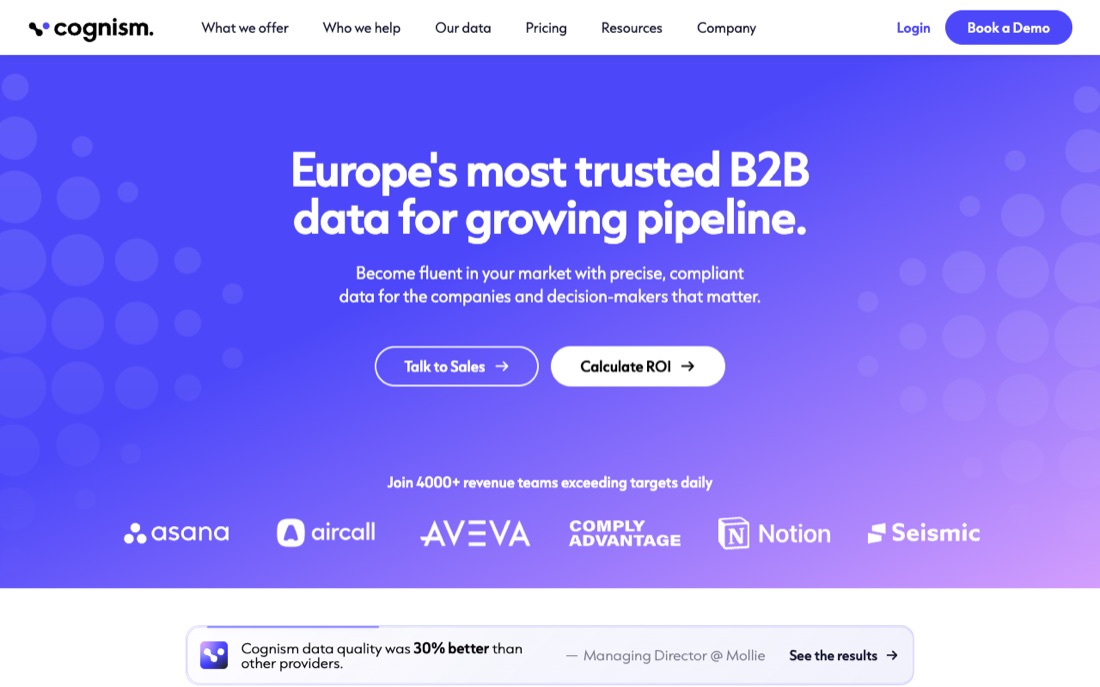
Cognism is a B2B data provider known for phone-verified mobile numbers and strong European coverage, with attention to GDPR compliance. Compared to Apollo, it is a data-only play: there is no built-in sequencer, so you pair it with your outreach stack. Teams pick Cognism when Apollo's data quality, mobile accuracy, or EU coverage falls short and when calling is a real channel for them. The trade-off is price and packaging. Cognism is a sales conversation with annual contracts rather than a self-serve credit-card signup, so it suits funded teams with a defined budget more than a solo seller testing the waters.
- Strong European coverage with GDPR-aligned data processes
- Phone-verified mobile numbers improve connect rates for callers
- Intent data and CRM integrations support account prioritization
- Premium pricing aimed at funded teams, not solo users
- Annual contracts and seat minimums reduce flexibility
- US coverage trails its European strength
ZoomInfo is the enterprise standard for B2B data, with deep firmographic and contact coverage plus intent data and org charts. Against Apollo it competes mainly on data depth and breadth, and it has added sequencing and workflow features over time. The honest trade-off is cost and commitment. ZoomInfo is a serious annual investment, often well into five figures, and onboarding is heavier than Apollo's. It fits larger sales orgs that need coverage and intent signal at scale and have the budget to match. For a small team or someone who liked Apollo's low-friction pricing, it will feel like overkill.
- One of the largest B2B contact and company databases available
- Rich firmographics, intent signals, and org-chart data
- Broad integrations with major CRMs and sales stacks
- Expensive with long annual contracts and opaque pricing
- Overkill for small teams with simple needs
- Onboarding and admin overhead can be heavy
Instantly is a cold email tool built for volume sending, with email warmup, inbox rotation, and deliverability tooling at its center. Against Apollo it overlaps on the sending side, not the database; many users run Instantly purely as the sequencer and source contacts elsewhere. Pick it if your priority is landing high-volume cold email in the inbox and you want deliverability features Apollo does not match. The trade-off is that its native data is thin and it is email-only, so there is no LinkedIn or calling motion. Good for agencies and lead-gen teams running large email campaigns, less so if you want one tool for both data and outreach.
- Built for high-volume cold email with inbox rotation
- Built-in warmup helps protect sender reputation
- Affordable entry pricing relative to enterprise platforms
- Focused on sending; lighter on data and enrichment
- High-volume sending still risks deliverability if misused
- Reporting and CRM depth trail full sales platforms
lemlist is a multichannel outreach tool covering email, LinkedIn, and calls, with a reputation for personalization features like custom images and variables. Like Apollo it does sequencing, and it added a contact database and email-finding over time, though that database is smaller than Apollo's. People choose lemlist when they want a polished sequencer with strong personalization and a multichannel motion rather than Apollo's data-first console. The trade-off is data depth: you will often enrich elsewhere for serious volume. It fits SMB and mid-market teams that care more about how outreach feels and converts than about owning the largest contact database.
- Image and video personalization makes emails feel custom
- Multichannel sequences span email and LinkedIn steps
- Built-in warmup and a starter lead database included
- Per-seat pricing adds up for larger teams
- Database depth trails dedicated data providers
- Heavy personalization features can slow campaign setup
We did not run a head-to-head trial of every tool here. Our picks are based on public pricing pages, documented feature sets, where each tool actually fits the buyer's job (replacing Apollo's database, its sequencer, or both), and publicly available review-site signal from G2 and Capterra. Where a tool has no stable public rating, we left the rating out rather than guess.
Why teams look for an Apollo alternative
Apollo wins on price and breadth, but the two complaints that drive switching are data accuracy, especially mobile numbers and EU coverage, and a credit model where the real bill climbs once you export and dial at volume. Be clear which problem you are solving before you pick a replacement.
- Data accuracy: mobile and EU numbers can be hit or miss
- Credit costs that inflate the real monthly bill
- Generic outreach when the database does the driving
- Outgrowing all-in-one for a best-of-breed stack
How to choose: match the tool to your real gap
There is no single best Apollo alternative because Apollo bundles several jobs. Decide whether your bottleneck is data quality, enrichment, sending, or the decision of who to contact and why now, then pick accordingly.
- Better or compliant data: Cognism or ZoomInfo
- Custom enrichment workflows: Clay
- Dedicated cold email sending: Instantly or lemlist
- Account selection and campaign quality: Overloop and max
How this brief was reviewed.
- Freshness
- Updated May 27, 2026. This page was checked for current comparisons language, metadata quality, schema coverage, internal links, and whether the advice still reflects signal-led sales in 2026.
- Editorial review
- Reviewed by max research team. The brief is written from max's sales operating model: best-fit customer profile first, evidence second, human-approved outreach third. It avoids claiming private intent or guaranteed outcomes.
- Method
- This guide uses public product positioning, buyer comparison intent, outbound workflow boundaries, and the jobs each tool is hired to do. Recommendations are framed as decision support for sales teams, not as legal, deliverability, or revenue guarantees.
Questions buyers ask before acting.
Keep the thread.
 vs
vs
Clay alternatives
The best Clay alternatives in 2026, compared on price and fit. From simpler enrichment and data tools to signal-led outreach and decisioning.
B2B SaaS lead generation
12 B2B SaaS lead generation strategies for 2026, organized around the 95:5 rule, with sourced CAC and conversion benchmarks, signal-led outbound, PLG, and review sites.
- New signal
Website visitor signal
Acme Inc. visited your pricing page four times this week, they're evaluating right now.
Website visitor signal
Turn anonymous website visitors and account-level traffic into lead generation campaigns with max.
The practical test is simple: can the system explain why this specific account deserves a human touch now, using evidence the buyer would recognize?
Try max free