Best sales engagement platforms, and what sits upstream of them
Sales engagement platforms run the rep workflow: cadences, calls, emails, and analytics. They are the execution backbone of many sales teams. What they assume, and rarely solve, is the decision of who belongs in a cadence and why now.
Published . Reviewed for freshness, claim boundaries, and current sales signal logic on .
What is the best sales engagement platforms?
The best sales engagement platforms manage cadences, dialer, email, and rep analytics at scale. They are built for execution once targeting and messaging are set. max sits upstream: it reads buying signals, applies best-fit rules, prioritizes accounts, and drafts the message, then the engagement platform runs the cadence.
 Where max fits
max is a standalone AI sales agent. It reads ICP rules, account context, and buying signals, then recommends the next move and prepares a campaign packet for human approval. It decides and drafts; it is not the sender itself.
- Best enterprise platform: Outreach
- Deepest cadence engine, forecasting, and conversation intelligence for large multi-team revenue orgs.
- Best if you live in Salesforce: Salesforce
- Sales Engagement runs cadences natively inside Sales Cloud, so there is no second system to sync.
- Best for SMB: Apollo
- Built-in contact database, email, and dialer in one tool keeps small teams cheap and fast.
- Best value: Overloop
- Lighter LinkedIn plus email outbound for SMB teams that want execution without enterprise pricing.
- Best decision layer: max
- Signal-led AI agent that prioritizes accounts and drafts outreach; it decides who to work, not just send.
The tools, compared
Most of these solve a different job, so the right setup is often a stack. Each row is what the tool is genuinely best at, when to choose it, and what to watch for.
| Tool | Best for | Choose it when | Watch out for |
|---|---|---|---|
| from $69/user/mo | Agile multichannel engagement for SMB and founder-led teams. | You want to launch quickly without enterprise overhead. | Lighter than enterprise platforms on governance and forecasting. |
| from €190/mo | Decides who belongs in a cadence and why now, then drafts it. | Account selection and timing are the bottleneck. | A decision layer; the platform runs the cadence. No free trial. |
| Custom | Cadences, dialer, and forecasting for large teams. | Enterprise scale with RevOps governance. | No price transparency; five-figure onboarding reported. |
| Custom | Cadences with strong rep coaching and analytics. | Larger teams that prioritize coaching. | Annual contracts well into five figures. |
| from $49/user/mo | Affordable all-in-one for SMB teams. | You want data plus engagement on a budget. | Less depth than dedicated platforms. |
| from $49/mo | Email, LinkedIn, and AI sequencing for SMB. | Multichannel sequencing without enterprise cost. | Cost climbs once you add channels. |
| from $34/user/mo | Gmail-native tracking, scheduling, and light sequencing. | Gmail-first reps. | Real sequencing on higher tiers; Google Workspace only. |
| Custom | Sales engagement native to Salesforce. | You are standardized on Salesforce. | Best value only inside the Salesforce stack. |
| Custom | Salesforce-native engagement tied to a revenue platform. | Enterprise Salesforce teams. | No public pricing; seat minimums and annual contracts. |






Feature comparison
The capabilities that usually decide the shortlist, at a glance. Figures are the vendors' own published numbers.
| Tool | Cadences | Dialer | Conversation intelligence | CRM sync | Best for size | Starting price |
|---|---|---|---|---|---|---|
| Overloop | Email and LinkedIn | No | No | HubSpot, Salesforce, Pipedrive | SMB and agencies | From $69/mo |
| max | Not a cadence tool | - | - | - | Any sales team | From €190/mo |
| Outreach | Yes, core feature | Yes, built-in | Yes, Kaia | Salesforce, Dynamics | Mid-market, enterprise | Quote-based |
| Salesloft | Yes, core feature | Yes, built-in | Yes, Conversations | Salesforce, Dynamics, HubSpot | Mid-market, enterprise | Quote-based |
| Apollo | Yes, sequences | Yes, built-in | Yes, included | Salesforce, HubSpot | SMB to mid-market | Free; paid from $49/mo |
| Reply.io | Yes, multichannel | Yes, built-in | Limited | HubSpot, Salesforce, Pipedrive | SMB to mid-market | From $59/mo |
| Mixmax | Yes, sequences | Yes, add-on | No | Salesforce | SMB, Gmail teams | From $34/mo |
| Salesforce | Yes, Sales Engagement | Yes, Dialer add-on | Yes, Einstein Conversation | Native to Sales Cloud | Mid-market, enterprise | Quote-based |
| Groove (Clari) | Yes, flows | Yes, built-in | Via Clari Copilot | Native to Salesforce | Mid-market, enterprise | Quote-based |
A closer look at each option
What each tool actually does, who it fits, and the honest trade-off, in the order they appear above.
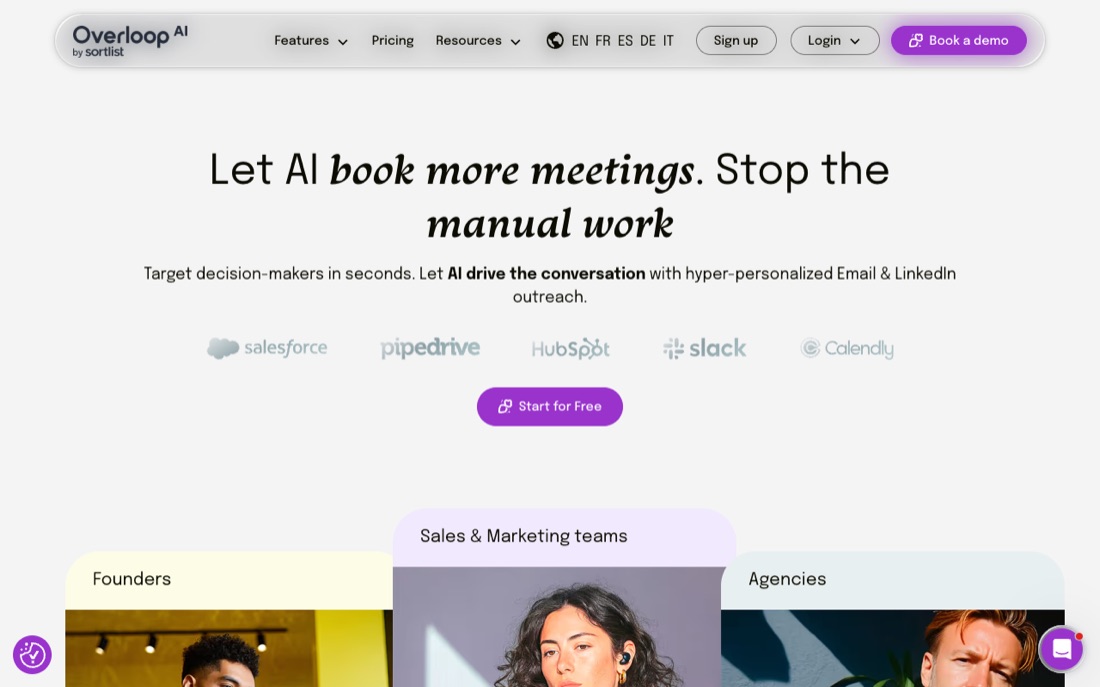
Overloop is a lightweight outbound execution tool built around LinkedIn and email. Reps create multichannel sequences that mix connection requests, LinkedIn messages, and email steps, with a built-in finder for contact data and a sequence builder that triggers follow-ups automatically. It syncs activity back to a CRM and reports on opens, replies, and meetings booked. It fits small sales teams and founder-led outbound that want to run cadences without the weight of an enterprise platform. The honest trade-off: no native dialer and lighter analytics and admin controls than Outreach or Salesloft, so larger teams with strict governance needs will outgrow it. From $69 per user per month.
- Combines LinkedIn and email outbound in one sequence
- Lighter, simpler setup aimed at SMB teams
- Built-in email finder and CRM features
- Less depth than enterprise platforms like Outreach
- Smaller analytics and reporting surface
- Not built for large multi-team revenue orgs
max is a signal-led AI sales agent that sits upstream of your engagement stack as a decision layer. It reads your ICP and live buying signals, prioritizes which accounts deserve attention now, and drafts campaign packets that a human reviews and approves before anything goes out. Think of it as the account-selection and why-now brain rather than the cadence engine: it decides who to work and why, then hands off to whatever sequencing tool your reps already run. It fits teams drowning in accounts who want sharper targeting before they spend rep time. The honest trade-off: max does not execute or send cadences itself, so you still need an engagement platform to run the outreach. From EUR 190 per month, no free trial.
- Signal-led account prioritization, surfaces who to work next
- Drafts outreach with quality you review before send
- Human-in-the-loop by design, you keep control
- Not a cadence-execution platform, pairs with one
- No free trial, paid direct
- Newer product, smaller track record
Outreach is one of the heavyweight sales engagement platforms, built for mid-market and enterprise revenue teams. It handles multichannel sequences across email, calls, LinkedIn, and SMS, ships a native dialer, and layers in deal management, conversation intelligence, and forecasting on top of the cadence engine. CRM sync with Salesforce is deep, and admin controls and reporting are made for large org structures. It fits teams with a defined sales process and the headcount to administer it. The honest trade-off: it is expensive, the implementation is heavy, and smaller teams tend to use a fraction of the features they pay for.
- Deep multi-step cadence and sequence engine
- Conversation intelligence and call recording built in
- Strong forecasting, analytics, and CRM sync
- Enterprise pricing, heavy for small teams
- Steep setup and admin overhead
- Often needs an annual contract
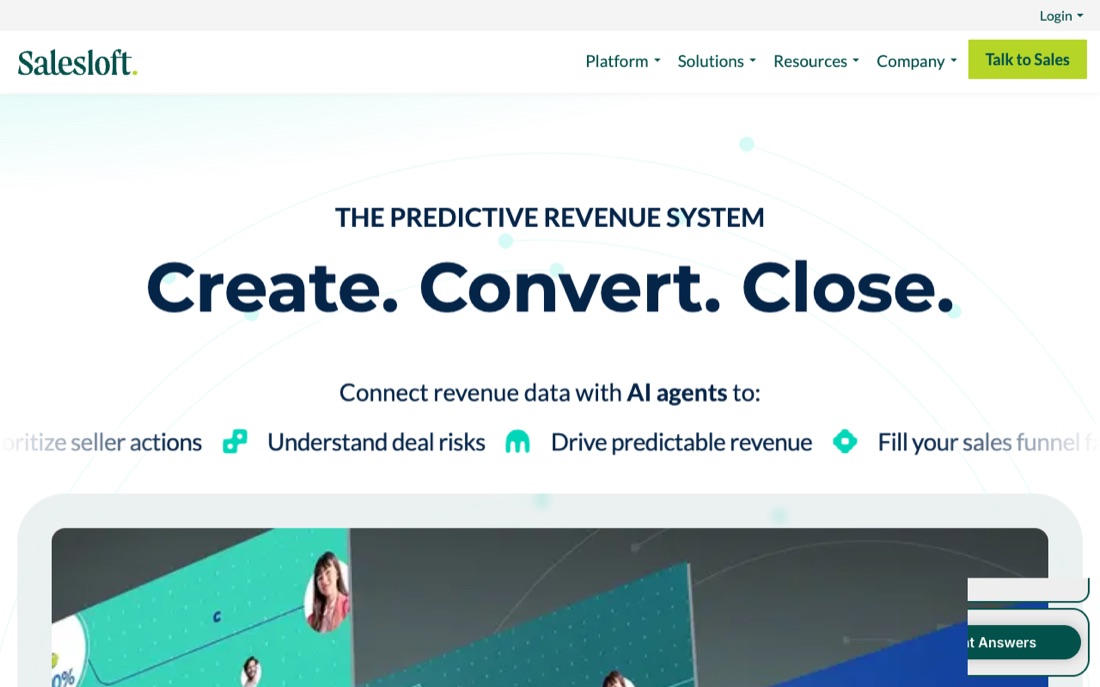
Salesloft is the other major enterprise engagement platform and Outreach's closest peer. Its Cadence and Rhythm features sequence email, calls, and social touches, with a dialer, conversation intelligence, and deal and forecasting modules folded into one workflow. It leans on AI to prioritize the next best action for reps and reports thoroughly on activity and pipeline. It fits mid-market and enterprise teams that want a single rep workspace tied tightly to the CRM. The honest trade-off: like Outreach, it carries real cost and onboarding effort, and the broad feature set can feel like overkill for a lean SMB team running simple cadences.
- Mature cadence builder with strong adoption tooling
- Conversation intelligence and deal analytics included
- Tight Salesforce and CRM integration
- Priced for mid-market and enterprise
- Onboarding and configuration take time
- Overkill for a small outbound team
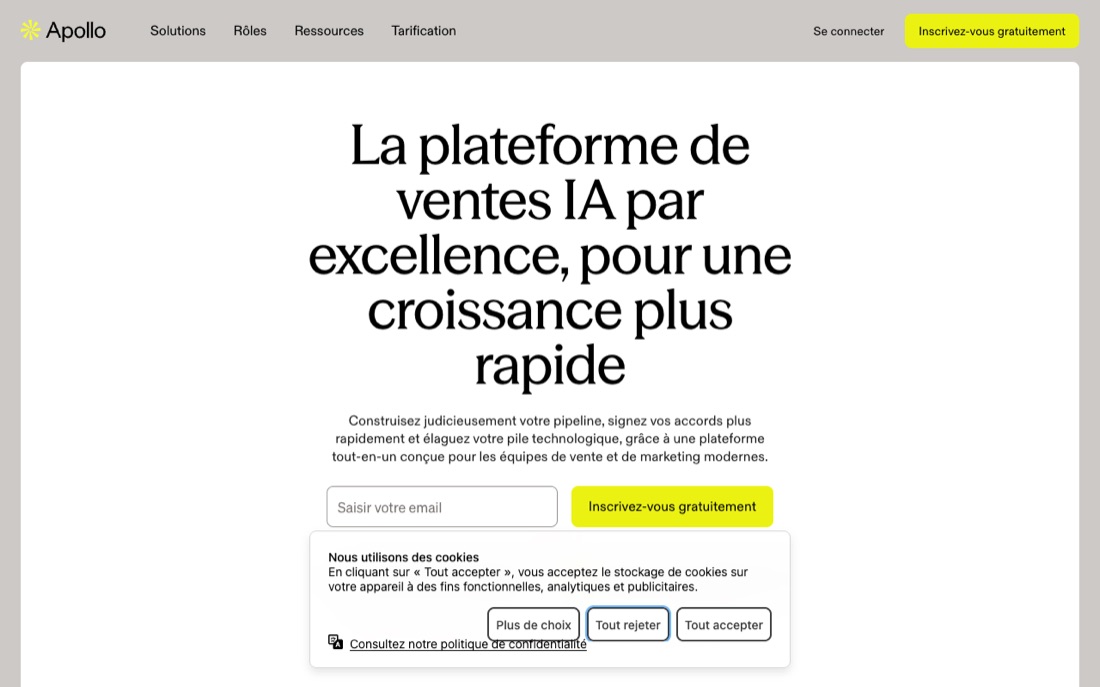
Apollo combines a large B2B contact database with built-in engagement, which is its main draw. You prospect from its data, push contacts straight into email and call sequences, dial through a native dialer, and track replies and meetings without stitching tools together. CRM sync and basic analytics are included, and the pricing undercuts the enterprise platforms. It fits SMB and mid-market teams that want data and outreach in one affordable place. The honest trade-off: data accuracy is uneven and the engagement and analytics depth does not match a dedicated platform like Outreach or Salesloft, so heavy outbound shops may hit ceilings.
- Built-in B2B contact database plus engagement
- Email sequences and dialer in one tool
- Affordable entry tiers for SMB teams
- Data accuracy varies by region and role
- Cadence depth lighter than Outreach or Salesloft
- Power features gated behind higher tiers
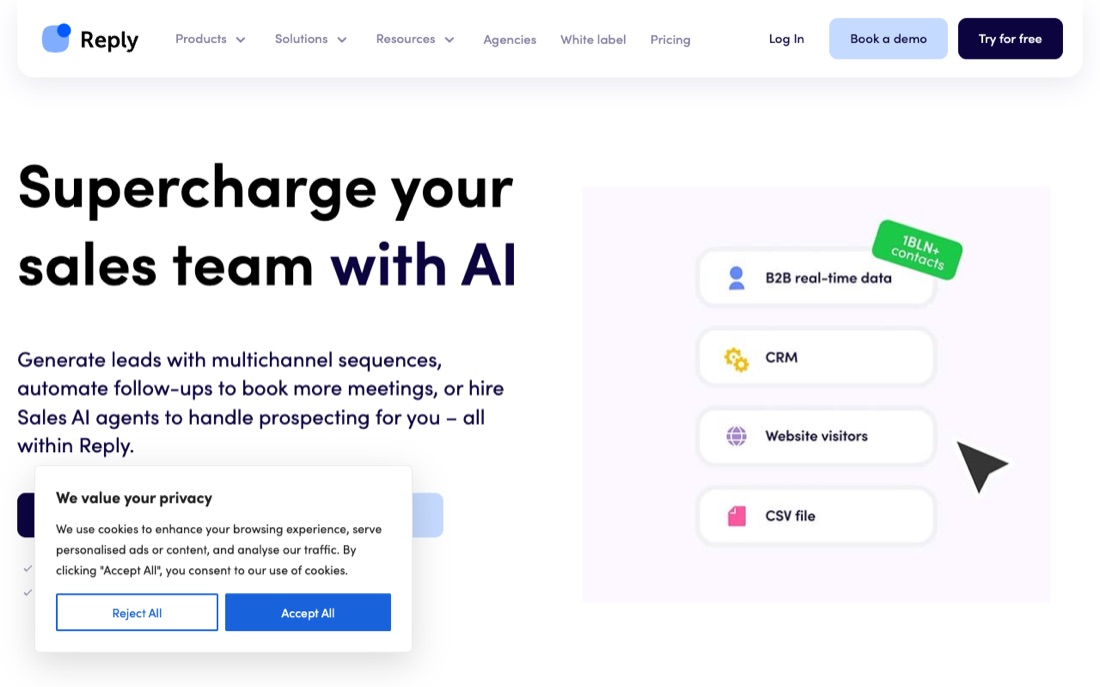
Reply.io is a multichannel engagement tool that runs sequences across email, LinkedIn, calls, SMS, and WhatsApp, with AI assistance for drafting and a focus on automated, scalable outreach. It includes email validation, a dialer, CRM integrations, and reporting on each channel's performance. It fits SMB and mid-market sales and lead-gen teams that want broad channel coverage at a moderate price. The honest trade-off: it is more execution tool than full revenue platform, so the deal management, forecasting, and enterprise admin depth of Outreach or Salesloft is not there. Teams scaling beyond pure outreach often need to add tooling around it.
- Multichannel sequences across email, LinkedIn, calls
- Built-in email finder and verification
- Reasonable pricing for SMB outbound teams
- Reporting shallower than enterprise platforms
- Deliverability depends on your own sending hygiene
- Less suited to large coordinated revenue teams
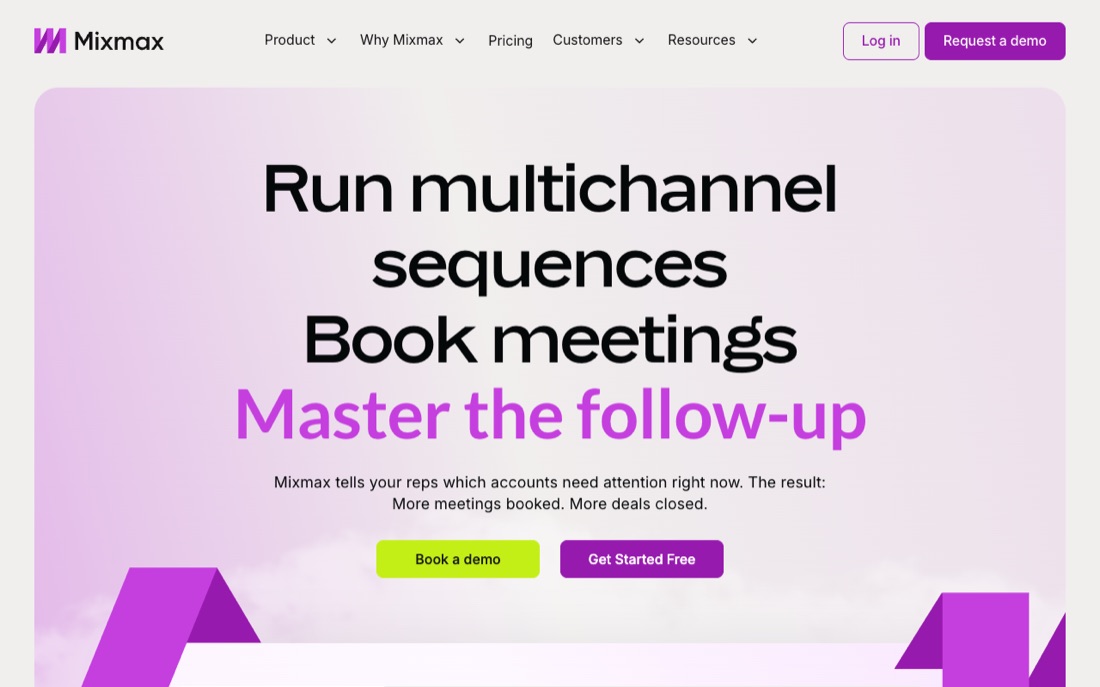
Mixmax is an engagement tool that lives inside Gmail, which shapes who it is for. It adds sequences, send scheduling, templates, calendar booking, and engagement tracking directly in the inbox, plus reporting and CRM sync for Salesforce. Reps who run on Google Workspace get a low-friction way to automate follow-ups without leaving email. It fits SMB and mid-market teams that are email-first and Gmail-native. The honest trade-off: its multichannel and dialer capabilities are limited next to dedicated platforms, and it is built around Gmail, so Outlook-heavy or multichannel-heavy teams will find it narrow.
- Lives inside Gmail for fast adoption
- Sequences, scheduling, and email tracking built in
- Light footprint for small teams
- Gmail-centric, weaker fit outside Google Workspace
- No real dialer or call workflow
- Not built for enterprise-scale revenue orgs
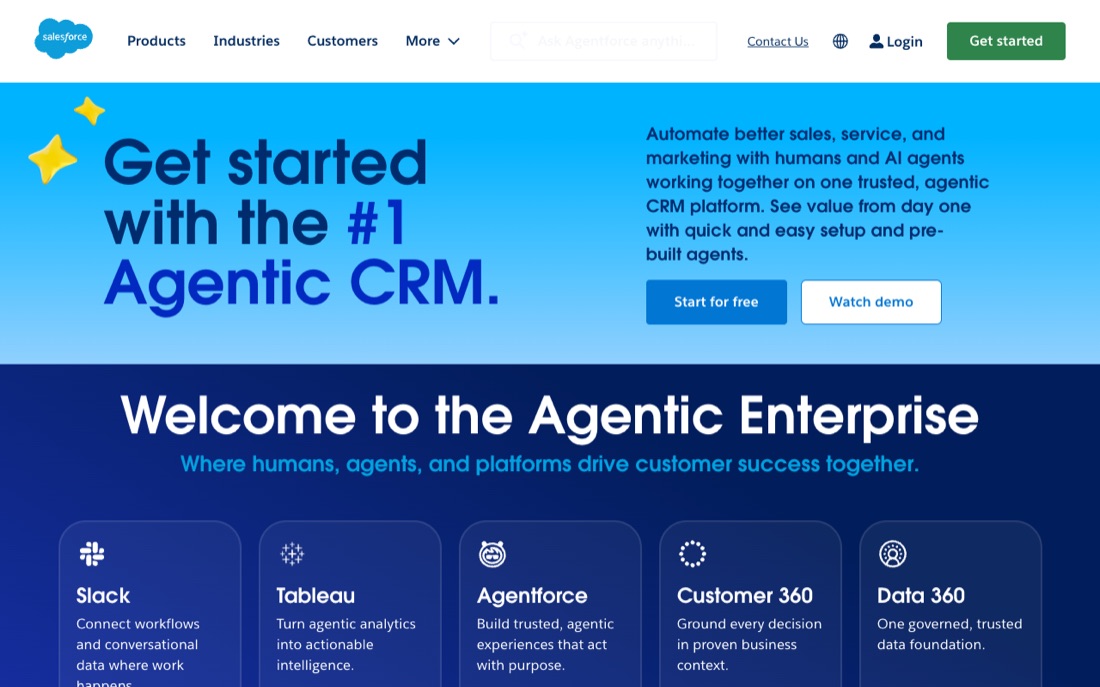
Salesforce Sales Engagement (formerly High Velocity Sales, part of Sales Cloud) adds cadences directly inside the CRM. Reps work from a prioritized work queue, run email and call sequences, and log every touch natively, so there is no separate sync to manage and the data lives where pipeline and reporting already are. It fits organizations already standardized on Salesforce that want engagement without buying a third-party platform. The honest trade-off: it requires Sales Cloud and the right licensing, the cadence and dialer experience is less polished than purpose-built tools like Outreach or Salesloft, and configuration leans on admin time.
- Cadences run natively inside Sales Cloud
- No separate engagement tool to sync
- Reporting sits beside your existing pipeline data
- Requires Salesforce as your CRM
- Less specialized than standalone engagement tools
- Setup needs Salesforce admin expertise
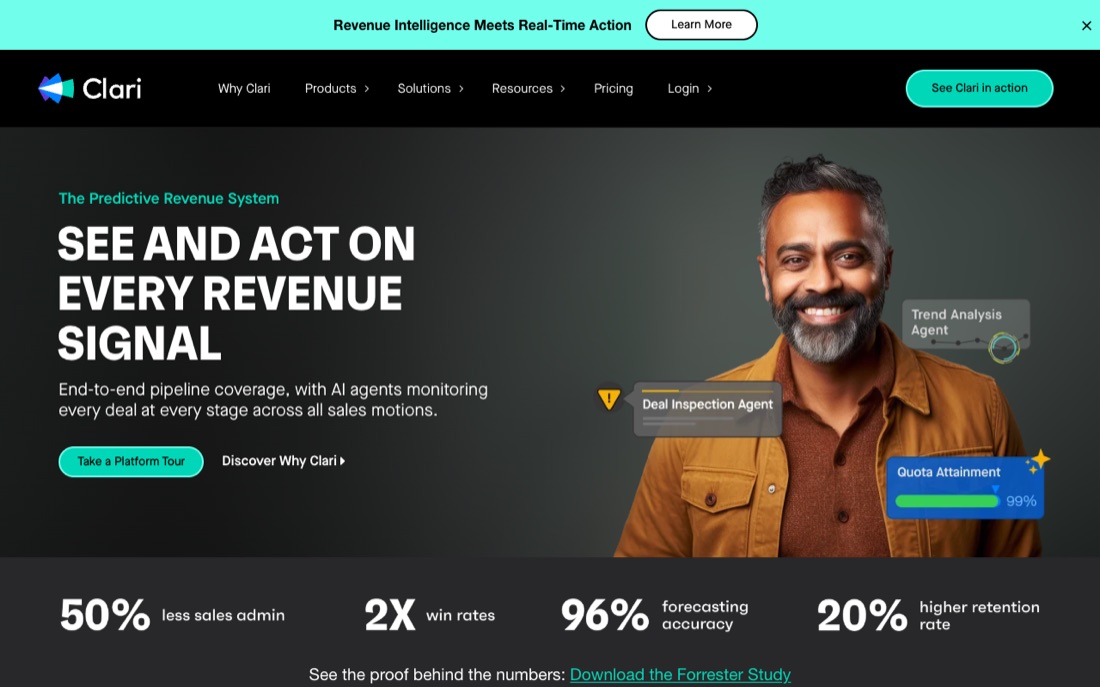
Groove, now part of Clari, is a sales engagement platform known for being Salesforce-native, writing activity back in real time rather than syncing in batches. It runs multichannel flows across email, calls, and LinkedIn, includes a dialer, and reports on rep activity and pipeline, with the Clari acquisition tying it into revenue forecasting. It fits Salesforce-centric mid-market and enterprise teams that prioritize clean CRM data. The honest trade-off: its value is strongest for Salesforce shops, and as part of Clari the standalone product positioning and pricing are less transparent than independent platforms.
- Salesforce-native engagement, now part of Clari
- Cadences and activity capture tie into revenue platform
- Strong fit for Salesforce-first sales teams
- Best value only inside the Salesforce ecosystem
- Enterprise-oriented, less suited to small teams
- Standalone use weaker than bundled with Clari
Each review is based on publicly available product documentation, vendor pricing pages, and aggregated user reviews from G2 and Capterra as of mid-2026. We did not run controlled head-to-head trials of every platform; ratings are pulled from public review sites and may shift over time, so verify current pricing and scores before you decide.
What engagement platforms own
Sales engagement platforms own execution and rep productivity: multi-step cadences, dialer, email, task management, and analytics. For larger teams they are essential operating infrastructure. They are designed to run a motion, not to decide which accounts the motion should target.
- Multi-step cadences across channels
- Dialer and task management
- Rep productivity and coaching
- Engagement and pipeline analytics
Where max fits in the stack
max is the decision layer upstream of the platform. It decides who deserves a cadence and why now, and drafts the message, then the engagement platform executes. This pairs strong execution with strong targeting instead of scaling a weak list faster.
- Account selection by fit plus timing
- Why-now reasoning per account
- Cadence-ready drafts for approval
- A learning loop by signal type
How this brief was reviewed.
- Freshness
- Updated June 15, 2026. This page was checked for current comparisons language, metadata quality, schema coverage, internal links, and whether the advice still reflects signal-led sales in 2026.
- Editorial review
- Reviewed by max research team. The brief is written from max's sales operating model: best-fit customer profile first, evidence second, human-approved outreach third. It avoids claiming private intent or guaranteed outcomes.
- Method
- This guide uses public product positioning, buyer comparison intent, outbound workflow boundaries, and the jobs each tool is hired to do. Recommendations are framed as decision support for sales teams, not as legal, deliverability, or revenue guarantees.
Questions buyers ask before acting.
Keep the thread.
 vsO
vsOOutreach alternatives
The best Outreach alternatives in 2026, compared on price and fit. From enterprise engagement platforms to agile multichannel and signal-led targeting.
- vs

Salesloft alternatives
The best Salesloft alternatives in 2026, compared on price and fit. From enterprise engagement platforms to agile multichannel and signal-led targeting.
Best AI SDR tools
A practical guide to AI SDR tools, from contact databases and enrichment workflows to email senders, CRM systems, and signal-led sales agents like max.
The practical test is simple: can the system explain why this specific account deserves a human touch now, using evidence the buyer would recognize?
Try max free