The best Salesloft alternatives, compared
Salesloft is an enterprise engagement platform built around cadences, coaching, and forecasting, priced to match. The right alternative depends on whether you want another enterprise platform, a lighter agile tool, a lower price, or sharper targeting before the cadence runs.
Published . Reviewed for freshness, claim boundaries, and current sales signal logic on .
What is the best Salesloft alternative?
The best Salesloft alternatives in 2026 are Outreach for a like-for-like enterprise platform, Apollo and Reply.io for affordable engagement, Mixmax for Gmail-first teams, and signal-led tools like Overloop and max when the gap is account selection and timing rather than cadence management. Teams usually switch for cost, weight, or better targeting.
 Where max fits
max is a standalone AI sales agent. It reads ICP rules, account context, and buying signals, then recommends the next move and prepares a campaign packet for human approval. It decides and drafts; the platform runs the cadence.
- Best enterprise alternative: Outreach
- Closest like-for-like to Salesloft: deep cadences, forecasting, and admin controls for large revenue teams.
- Best for SMB: Overloop
- Lighter and cheaper than Salesloft, combines LinkedIn and email outbound for small teams.
- Best value: Apollo
- Built-in B2B database plus sequencing in one tool, strong free and low-cost tiers.
- Best decision layer: max
- Signal-led AI agent that prioritizes who to work and drafts the message, with human approval.
- Best Gmail-native: Mixmax
- Lives inside Gmail with sequences, tracking, and scheduling for reps who work from the inbox.
The tools, compared
Most of these solve a different job, so the right setup is often a stack. Each row is what the tool is genuinely best at, when to choose it, and what to watch for.
| Tool | Best for | Choose it when | Watch out for |
|---|---|---|---|
| from $69/user/mo | Agile multichannel engagement without enterprise overhead. | You want to launch fast without a heavy platform. | Lighter on forecasting and governance. |
| from €190/mo | Decides who belongs in a cadence and why now, then drafts it. | Account selection and timing are the bottleneck. | A decision layer; the platform runs the cadence. No free trial. |
| Custom | The closest enterprise engagement alternative. | Large org with a defined process. | No public price; heavy for small teams. |
| from $49/user/mo | Affordable all-in-one of data plus engagement. | SMB wanting data and cadences on a budget. | Less depth than dedicated platforms. |
| from $49/mo | Multichannel sequencing with AI assistance. | Email, LinkedIn, and calls without enterprise cost. | Lighter analytics and governance. |
| from $34/user/mo | Gmail-native engagement and light sequencing. | Gmail-first reps. | Google Workspace only. |
| Custom | Salesforce-native engagement tied to a revenue platform. | Enterprise Salesforce teams. | No public pricing; seat minimums. |




Feature comparison
The capabilities that usually decide the shortlist, at a glance. Figures are the vendors' own published numbers.
| Tool | Cadences | Dialer | Conversation intelligence | CRM sync | Best for size | Starting price |
|---|---|---|---|---|---|---|
| Overloop | Email-led sequences | No | No | HubSpot, Salesforce, Pipedrive | SMB outbound teams | $69/user/mo |
| max | Not a cadence tool | - | - | - | Any sales team | Decision layer |
| Outreach | Sequences | Built-in | Kaia, included | Salesforce, Dynamics | Mid-market, enterprise | Custom quote |
| Apollo | Sequences | Built-in | Yes, add-on | Salesforce, HubSpot | SMB to mid-market | Free; $49/user/mo |
| Reply.io | Multichannel sequences | Cloud calls | Limited | Salesforce, HubSpot, Pipedrive | SMB outbound teams | $59/user/mo |
| Mixmax | Gmail sequences | Add-on dialer | No | Salesforce native | SMB Gmail teams | $34/user/mo |
| Groove (Clari) | Flows | Built-in | Via Clari Copilot | Salesforce native | Mid-market, enterprise | Custom quote |
A closer look at each option
What each tool actually does, who it fits, and the honest trade-off, in the order they appear above.
Overloop runs LinkedIn and email outbound from one place: sequences that mix connection requests, InMails, and email steps with basic follow-up logic. Where Salesloft is built for large rep teams running phone-heavy cadences inside Conversations and Deals, Overloop is leaner and aimed at SMBs and small sales teams that want multichannel sequencing without enterprise overhead. It starts at $69 per user per month, well under Salesloft's enterprise contracts. The honest trade-off: you give up Salesloft's depth in dialer, conversation intelligence, and forecasting. If LinkedIn is central to your outbound and you want something cheaper to run, it fits. If you need a full revenue platform, it will feel thin.
- Combines LinkedIn and email outbound in one workflow
- Lighter and cheaper than Salesloft for SMB teams
- Quick to set up multichannel sequences
- Lighter analytics than enterprise platforms
- Less suited to large multi-team org structures
- Smaller integration ecosystem than incumbents
MAX is a signal-led AI sales agent rather than a cadence engine. It watches buying signals, decides which accounts deserve attention and why now, then drafts the outreach for a human to review and send. That is a different layer from Salesloft: Salesloft executes and tracks cadences across a rep team, while MAX sits upstream on the who and why and hands you a starting draft. It does not run dialers, manage Deals, or replace cadence execution, so it is not a like-for-like swap. From EUR 190 per month, no free trial. It fits teams that already have execution covered but want sharper targeting and prioritization. If your gap is running sequences at volume, MAX is not that tool.
- Prioritizes which accounts to work using buying signals
- Drafts tailored outreach you review before sending
- Human-in-the-loop autonomy you set yourself
- Not a cadence-execution platform like Salesloft
- No free trial, paid from start
- Newer product with a smaller track record
Outreach is Salesloft's closest head-to-head rival: a full sales execution platform with sequences, a dialer, deal management, conversation intelligence, and forecasting. Buyers cross-shopping Salesloft almost always look at Outreach because the feature surface overlaps so heavily. It skews toward mid-market and enterprise teams with dedicated ops support, and the AI features around deal health and rep guidance have matured. The trade-off mirrors Salesloft's: pricing is enterprise-tier and rarely public, onboarding takes real time, and smaller teams often find it heavier than they need. If you want the same category of platform with a different vendor, Outreach is the natural alternative.
- Deep multichannel cadences for large sales teams
- Conversation intelligence for call recording and analysis
- Deals and forecasting alongside sequencing
- Strong CRM sync with Salesforce
- Priced and built for enterprise, heavy for SMB
- Steeper setup and admin overhead
- Longer onboarding before reps see value
Apollo bundles a B2B contact database with sequencing, a dialer, and basic engagement tracking, which makes it a popular Salesloft alternative for teams that also want prospecting data in the same tool. The appeal is price and breadth: you get list-building and outreach without buying a separate data vendor. Compared to Salesloft, the cadence and conversation-intelligence depth is shallower, and data accuracy varies by region and seniority. It fits startups and SMBs that value an all-in-one starting point over best-in-class execution. The honest trade-off is that as a team scales, the engagement layer can feel less polished than a dedicated platform.
- Built-in B2B contact database plus sequencing
- Strong free and low-cost paid tiers
- CRM sync and email plus calling in one tool
- Data accuracy varies by region and role
- Cadence depth lighter than Outreach or Salesloft
- Heavier users hit credit and enrichment limits
Reply.io is a multichannel sequencing tool covering email, LinkedIn steps, and calls, with AI assistance for drafting and reply handling. It is positioned below Salesloft on price and complexity, aimed at SMBs and outbound-led teams that want automated sequences without an enterprise platform. Against Salesloft, you lose the integrated dialer depth, conversation intelligence, and deal forecasting that larger rep teams rely on. What you gain is faster setup and lighter cost. It fits teams running high-volume email-and-LinkedIn outreach who do not need full revenue tooling. The trade-off is reporting and team-management features that are thinner than what enterprise sales orgs expect.
- Multichannel sequences across email, LinkedIn, and calls
- AI assistance for drafting and replies
- CRM integrations for syncing activity
- Deliverability needs careful warm-up management
- Interface can feel busy for new users
- Reporting less deep than enterprise platforms
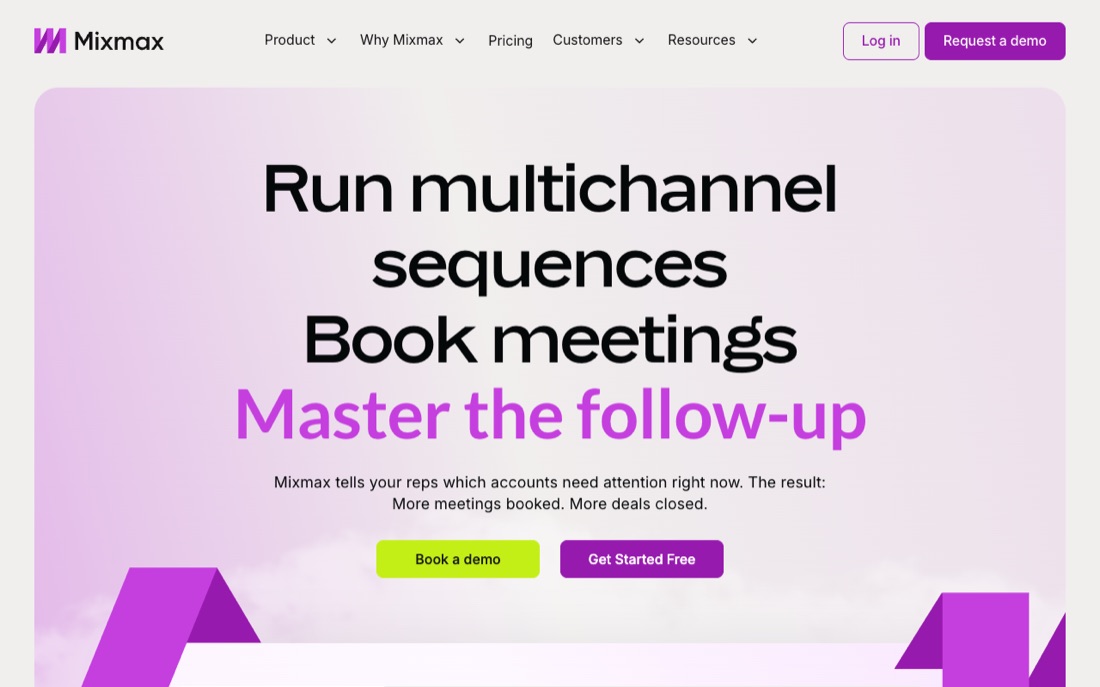
Mixmax lives inside Gmail and adds sequences, scheduling, templates, and engagement tracking on top of inbox-native workflows. It suits Google Workspace teams and AEs who want sequencing without leaving email, rather than a standalone command center. Compared to Salesloft, it is far lighter: no real dialer depth, no conversation intelligence, and less in the way of deal management or forecasting. The trade-off is scope. Mixmax is excellent for email-centric outreach and meeting booking, but a full sales org running phone-heavy cadences and pipeline reviews will outgrow it. For Gmail-first SMB teams that found Salesloft too heavy, it is a credible, cheaper alternative.
- Native Gmail sequences, tracking, and scheduling
- Fast for reps who work from the inbox
- CRM sync with Salesforce
- Gmail-centric, weaker fit for Outlook teams
- Lighter multichannel reach than dedicated platforms
- Less suited to large structured cadence programs
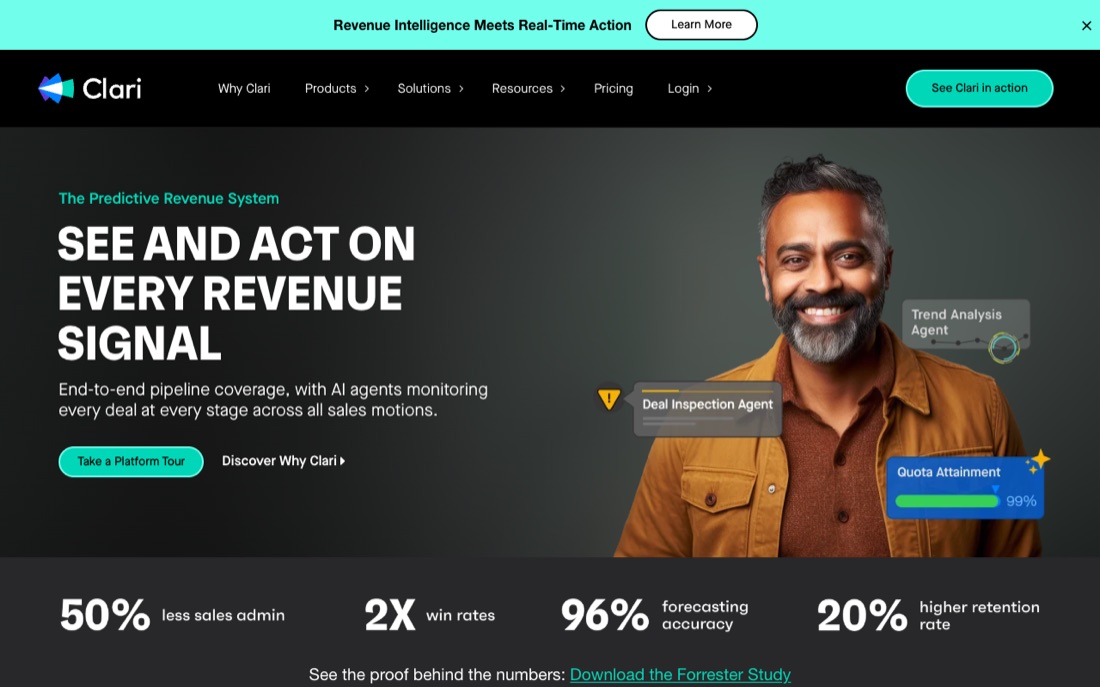
Groove, now part of Clari, is a sales engagement platform built tightly around Salesforce, offering sequences (called flows), a dialer, and activity capture that sync cleanly into the CRM. As a Salesloft alternative it appeals to Salesforce-heavy revenue teams that want engagement and Clari's forecasting in one ecosystem. The strength is CRM fidelity and the broader Clari revenue-platform story; the trade-off is that the value compounds mainly if you are already a Salesforce and Clari shop, and pricing is enterprise-tier. For teams outside that stack, the lock-in advantage that makes Groove compelling matters less.
- Salesforce-native engagement now part of Clari
- Cadences tied to revenue and pipeline workflows
- Conversation and activity capture for reps
- Strongest fit only for Salesforce shops
- Enterprise pricing and sales-led buying process
- Broader Clari platform can be more than SMBs need
Reviews are based on public product documentation, vendor pricing pages, and publicly listed G2 ratings as of mid-2026, not hands-on lab testing of every platform. Ratings move over time, so confirm the current number and check pricing directly with each vendor before deciding.
Why teams look for a Salesloft alternative
Salesloft is strong for enterprise revenue teams, so the usual reasons to leave are cost, weight, and opacity. Pricing is custom and lands in five figures annually, and the platform is more than smaller teams need. Decide whether you need another enterprise platform or something lighter and faster.
- Cost: five-figure annual contracts
- Weight: more than small teams need
- Opacity: no public price, mandatory demo
- Targeting: cadences do not fix who you contact
How to choose: match the tool to your real gap
Decide whether your bottleneck is enterprise-grade engagement, affordable multichannel, a Gmail-native workflow, or targeting, then pick accordingly.
- Like-for-like enterprise platform: Outreach
- Affordable engagement: Apollo or Reply.io
- Gmail-first teams: Mixmax
- Who to engage and why now: Overloop and max
How this brief was reviewed.
- Freshness
- Updated June 15, 2026. This page was checked for current comparisons language, metadata quality, schema coverage, internal links, and whether the advice still reflects signal-led sales in 2026.
- Editorial review
- Reviewed by max research team. The brief is written from max's sales operating model: best-fit customer profile first, evidence second, human-approved outreach third. It avoids claiming private intent or guaranteed outcomes.
- Method
- This guide uses public product positioning, buyer comparison intent, outbound workflow boundaries, and the jobs each tool is hired to do. Recommendations are framed as decision support for sales teams, not as legal, deliverability, or revenue guarantees.
Questions buyers ask before acting.
Keep the thread.
 vsO
vsOOutreach alternatives
The best Outreach alternatives in 2026, compared on price and fit. From enterprise engagement platforms to agile multichannel and signal-led targeting.
- vs

Apollo alternatives
The best Apollo alternatives in 2026, compared on price, data quality, and outbound fit. From enrichment and data tools to signal-led outreach.
Turn intent signals into outbound campaigns
A practical max playbook for turning best-fit customer rules, intent signals, account prioritization, LinkedIn outreach, and email copy into a campaign launch.
The practical test is simple: can the system explain why this specific account deserves a human touch now, using evidence the buyer would recognize?
Try max free