The best ZoomInfo alternatives, compared for 2026

Nicolas Finet·Updated 13 min read

The answer in 60 seconds

How do Max and ZoomInfo differ, and what still needs testing?

Define whether the required job is sales data and automation breadth, or an ICP-led workflow that detects signals and returns enriched leads. The cited documentation establishes scope only, not a winner.

Define whether the required job is sales data and automation breadth, or an ICP-led workflow that detects signals and returns enriched leads. The two columns below contain only narrow first-party facts checked July 21, 2026; they are not test results.

Published . Last materially updated .

Source checkZoomInfo: B2B Sales Prospecting Software | ZoomInfo Sales

Open the primary source (opens in a new tab)

Supports
ZoomInfo Sales documents contact and company search, buyer intent, website-visitor tracking, and sales automation within the same sales product.
Doesn’t prove
Vendor-authored documentation. It does not establish ZoomInfo's fit, field performance, or result against Max in your environment.
Use this guideWrite the data and intent job before comparing enterprise breadthLearning goals

Frame the decision

A useful comparison of ZoomInfo alternatives starts with the job you need done, not with the longest feature list. For this decision, use one written criterion: Define account and contact fields, geography, seniority, provenance, freshness, permitted use, intent-unit definition, correction path, exports, integrations, users, and the contract constraint that cannot be traded away.

By the end, you will be able to shortlist ZoomInfo alternatives by running “Validate one target-market account and contact sample” and applying a rejection rule written before the test.

After this guide, you can

  1. 01Turn this category decision into a checkable brief: Define account and contact fields, geography, seniority, provenance, freshness, permitted use, intent-unit definition, correction path, exports, integrations, users, and the contract constraint that cannot be traded away.
  2. 02Apply the same proof to every finalist: Give each finalist the same blinded target-account and contact sample, verify required fields against trusted references, test one correction and export, and reproduce the intended CRM handoff.
  3. 03Keep the required evidence and enforce the stop rule: Keep field-level coverage and validity, freshness, provenance, intent-definition notes, conflicts, correction effort, export and CRM results, implementation work, terms, and total cost. Reject a candidate that fails a permission, required-field, export, correction, or contract must-have; do not substitute profile count, intent branding, or demo breadth.

The field note turns this page’s criterion, proof, evidence log, and stop rule into a reusable evaluation sheet. It is not a ranking or an automatic purchase rule.

Documented head-to-head

Max vs ZoomInfo: what the documentation establishes

These columns paraphrase narrow first-party facts checked July 21, 2026. Read each statement as a capability to verify, never as a point awarded in advance.

Decision in 30 seconds

Scope split
Define whether the required job is sales data and automation breadth, or an ICP-led workflow that detects signals and returns enriched leads. The cited documentation establishes scope only, not a winner.
Test next
Give each finalist the same blinded target-account and contact sample, verify required fields against trusted references, test one correction and export, and reproduce the intended CRM handoff.
Reject if
Reject a candidate that fails a permission, required-field, export, correction, or contract must-have; do not substitute profile count, intent branding, or demo breadth.

Publisher product

Max

First-party pages checked

What the documentation says

What remains unknown

The Max homepage does not establish database breadth, field-level coverage and validity, visitor-identification scope, intent precision, export governance, or CRM-administration effort for a ZoomInfo-sized data workflow.

Compared incumbent

ZoomInfo

First-party pages checked

What the documentation says

What remains unknown

ZoomInfo's cited page does not establish field-level coverage or validity for your target market, intent precision, permitted use, implementation effort, or the result of the CRM workflow you need.

Three questions to answer first

  1. 01What coverage and validity does each route achieve on your exact geographies, seniorities, and required fields?
  2. 02How many intent or visitor matches survive an ordinary-explanation and account-fit review?
  3. 03Can accepted records enter the CRM with provenance, ownership, suppression, and correction history preserved?

Use one protocol for both products

Keep the inputs, users, acceptance criteria, evidence window, and reviewers unchanged. A documented capability is a test question, not a point awarded in advance.

Decision criterion
Define account and contact fields, geography, seniority, provenance, freshness, permitted use, intent-unit definition, correction path, exports, integrations, users, and the contract constraint that cannot be traded away.
Same-task proof
Give each finalist the same blinded target-account and contact sample, verify required fields against trusted references, test one correction and export, and reproduce the intended CRM handoff.
Evidence to keep
Keep field-level coverage and validity, freshness, provenance, intent-definition notes, conflicts, correction effort, export and CRM results, implementation work, terms, and total cost.
Stop rule
Reject a candidate that fails a permission, required-field, export, correction, or contract must-have; do not substitute profile count, intent branding, or demo breadth.

Reduce the shortlist

Start with the job, not a winner

Pick the output you actually need. The names in each lane have at least one dated first-party claim that explicitly documents that job; select a name to inspect its evidence card.

Decision in 30 seconds

Reduce the list before opening vendor demos

  1. 01 · Required job

    Choose one lane below. Treat every candidate without dated first-party evidence for that job as a research gap.

  2. 02 · Non-negotiable

    Define account and contact fields, geography, seniority, provenance, freshness, permitted use, intent-unit definition, correction path, exports, integrations, users, and the contract constraint that cannot be traded away.

  3. 03 · Test and stop

    Give each finalist the same blinded target-account and contact sample, verify required fields against trusted references, test one correction and export, and reproduce the intended CRM handoff.

    Reject when: Reject a candidate that fails a permission, required-field, export, correction, or contract must-have; do not substitute profile count, intent branding, or demo breadth.

  • Find target people or companies

    Create a searchable list with the people or accounts the team needs.

    7
    Why these names appear
    • Apollo: Apollo documents People search across its person database using filters such as persona, job title, location, and company size; saved results can be enrolled in a sequence, exported to CSV, or added to a list.
    • Cognism: Cognism documents three product areas: sales prospecting, CRM enrichment, and Data-as-a-Service; prospecting filters include role, seniority, location, industry, and company size.
    • Lead411: Lead411 documents contact emails and direct dials, company signals based on hiring, funding, and executive changes, plus CRM enrichment and an enrichment API.
    • Lusha: Lusha documents contact and company data, buying signals, and enrichment workflows delivered through its workspace, browser extension, API, and CRM integrations.
    • Overloop: Overloop documents an integrated contact database and AI-generated multichannel sequences spanning email and LinkedIn, including sequence steps, timing, messages, and follow-ups.
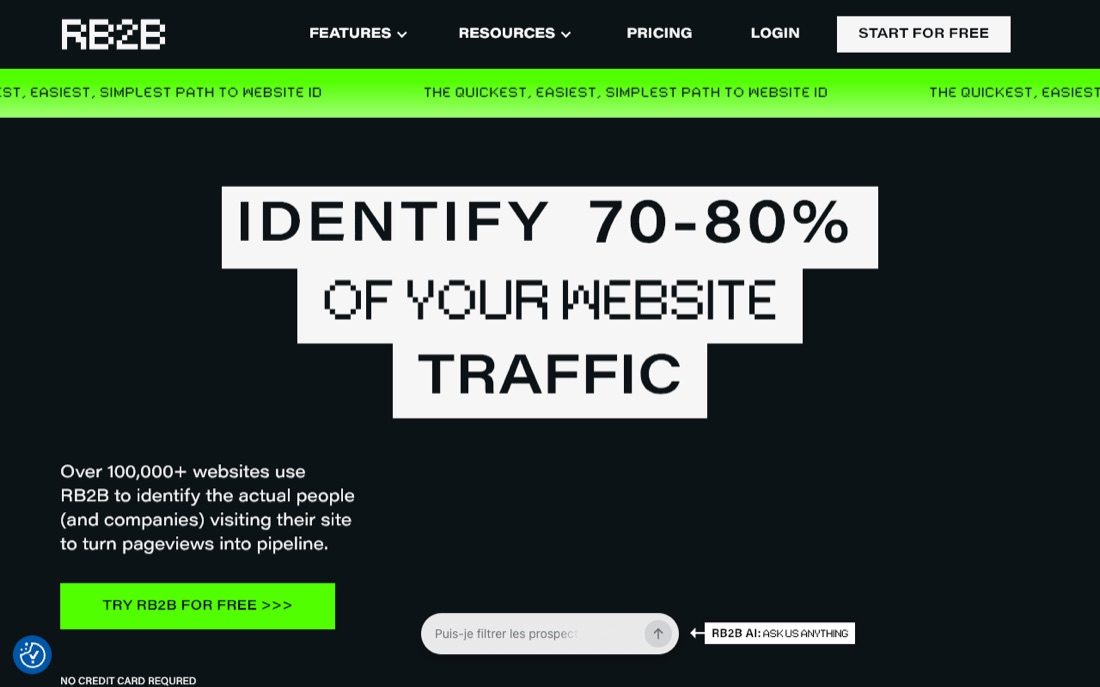
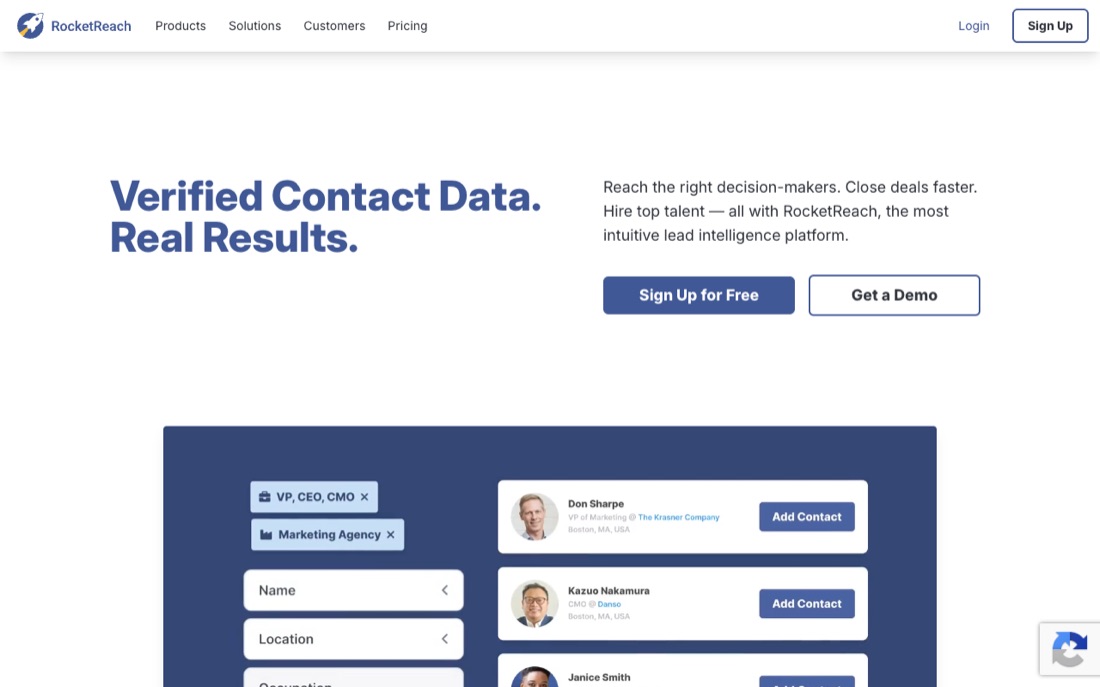
    • RocketReach: RocketReach presents email, phone, and social-profile lookup as the core scope of its lead-intelligence product.
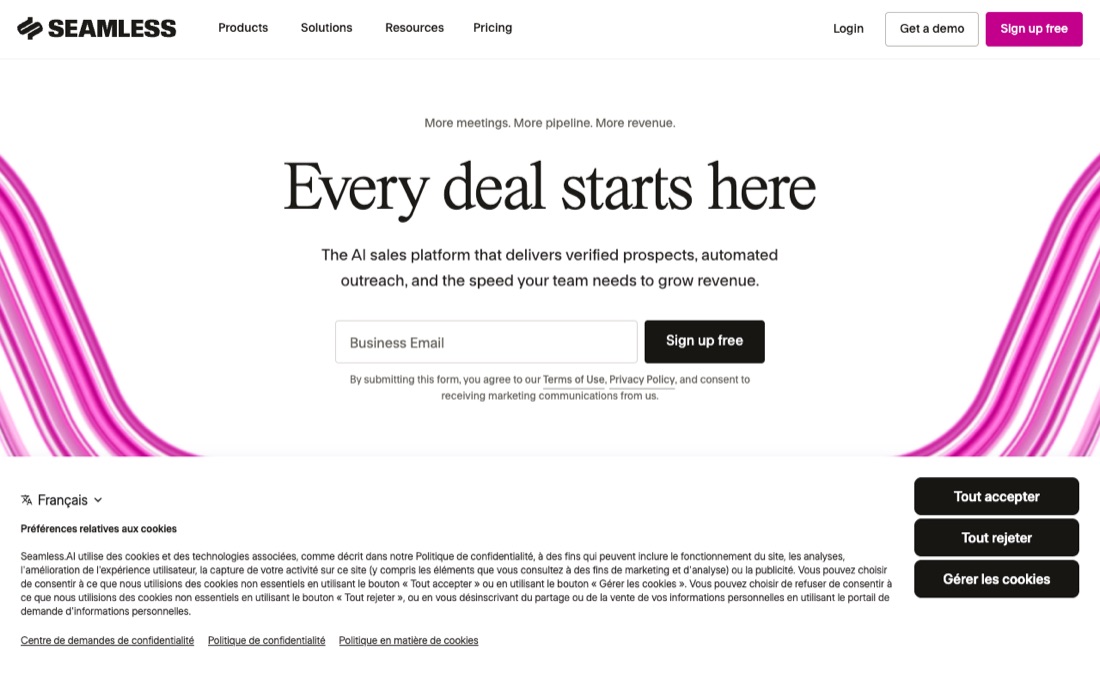
    • Seamless.AI: Seamless.AI documents a browser extension that surfaces contact emails, mobile numbers, firmographics, technologies, org charts, and related contacts while a user browses.
  • Enrich or refresh existing records

    Fill required fields on records you already hold and preserve their destination.

    5
    Why these names appear
    • Clearbit (HubSpot Breeze): HubSpot documents automatic enrichment for new contact and company records and continuous monthly refreshes for existing enriched records.
    • Cognism: Cognism documents three product areas: sales prospecting, CRM enrichment, and Data-as-a-Service; prospecting filters include role, seniority, location, industry, and company size.
    • Lead411: Lead411 documents contact emails and direct dials, company signals based on hiring, funding, and executive changes, plus CRM enrichment and an enrichment API.
    • Lusha: Lusha documents contact and company data, buying signals, and enrichment workflows delivered through its workspace, browser extension, API, and CRM integrations.
    • Seamless.AI: From the extension, operators can add contacts to lists, send them to a CRM, create tasks, run enrichment, or download data without returning to the main app.
  • Observe signals or intent

    Surface documented events or activity that can support account research.

    2
    Why these names appear
    • Lead411: Lead411 documents contact emails and direct dials, company signals based on hiring, funding, and executive changes, plus CRM enrichment and an enrichment API.
    • Lusha: Lusha documents contact and company data, buying signals, and enrichment workflows delivered through its workspace, browser extension, API, and CRM integrations.
  • Identify website visitors

    Return a documented account or person match from website activity.

    1
    Why these names appear
    • RB2B: RB2B documents qualified visitor matches that can include professional identity, business email, company attributes, referrer, and page-view history; it does not provide phone numbers and does not guarantee every field.
  • Verify or process contact data in batch

    Return explicit statuses or enrich a repeatable file-based workload.

    2
    Why these names appear
    • Cognism: Its Data-as-a-Service delivery options are a real-time API or scheduled manual batch delivery into destinations such as CRMs, data warehouses, CDPs, and data lakes.
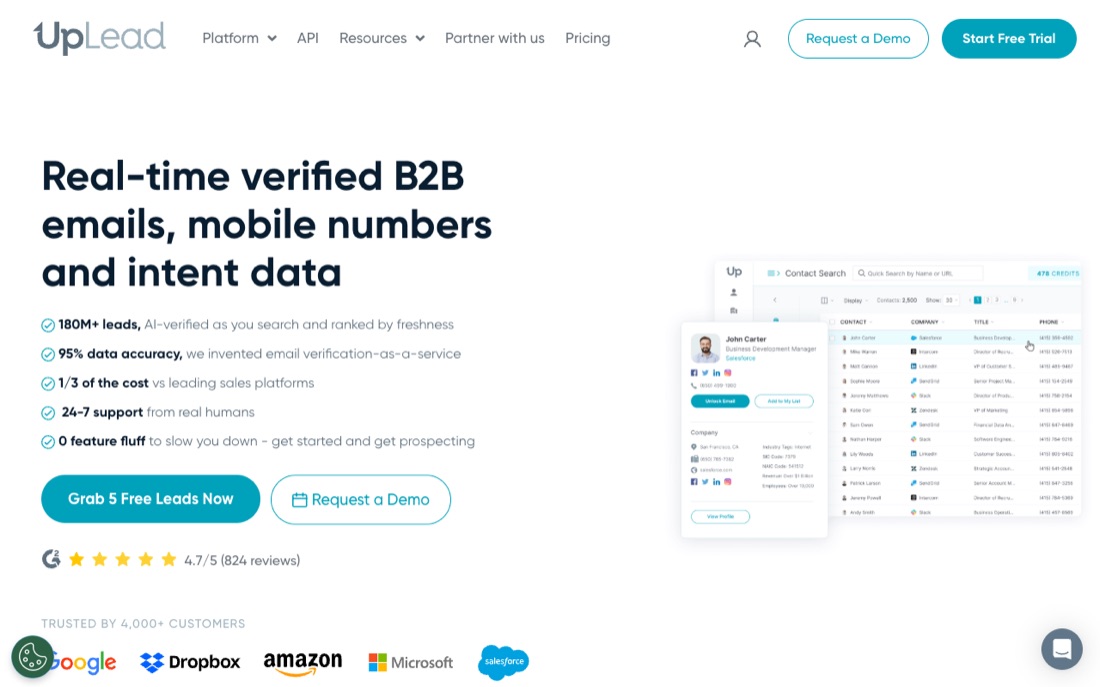
    • UpLead: UpLead documents real-time email verification at download or export, classifying addresses as Valid, Accept All, or Invalid and letting operators choose which classes to download.
  • Write back or hand off to a CRM

    Preserve accepted records, activity, and ownership in the operating system of record.

    5
    Why these names appear
    • Clearbit (HubSpot Breeze): Existing CRM values are retained unless an operator explicitly chooses to overwrite them during manual enrichment.
    • Cognism: Cognism documents three product areas: sales prospecting, CRM enrichment, and Data-as-a-Service; prospecting filters include role, seniority, location, industry, and company size.
    • Lead411: Lead411 documents contact emails and direct dials, company signals based on hiring, funding, and executive changes, plus CRM enrichment and an enrichment API.
    • Lusha: Lusha documents contact and company data, buying signals, and enrichment workflows delivered through its workspace, browser extension, API, and CRM integrations.
    • Seamless.AI: From the extension, operators can add contacts to lists, send them to a CRM, create tasks, run enrichment, or download data without returning to the main app.

The evaluation protocol

One proof, applied to every candidate

The list below is alphabetical, not ranked. Each card separates narrow facts found in first-party documentation from results we have not observed. Vendor documentation can establish what a product says it does; only the same-task proof can establish whether it works for your case.

  1. Criterion01

    Define account and contact fields, geography, seniority, provenance, freshness, permitted use, intent-unit definition, correction path, exports, integrations, users, and the contract constraint that cannot be traded away.

  2. Same-task proof02

    Give each finalist the same blinded target-account and contact sample, verify required fields against trusted references, test one correction and export, and reproduce the intended CRM handoff.

  3. Evidence to keep03

    Keep field-level coverage and validity, freshness, provenance, intent-definition notes, conflicts, correction effort, export and CRM results, implementation work, terms, and total cost.

  4. Stop rule04

    Reject a candidate that fails a permission, required-field, export, correction, or contract must-have; do not substitute profile count, intent branding, or demo breadth.

The candidates

Build a dated evidence sheet for each option

We checked the cited first-party pages on July 21, 2026. The notes below are traceable product facts, not hands-on findings. Reopen every source because packaging and capabilities can change, then record the common proof before deciding.

Archived public vendor-page capture for Apollo; verify the current pageOpen the full-size screenshot in a new tab
Select the image to open it full-size in a new tab. Archived for orientation only; interface and packaging may have changed.

Vendor-documented snapshot · checked July 21, 2026

  • Apollo documents People search across its person database using filters such as persona, job title, location, and company size; saved results can be enrolled in a sequence, exported to CSV, or added to a list.

    Source: Search for People – Apollo ↗
  • Apollo documents Sequences as planned, customizable outreach campaigns whose touchpoints can include emails, phone calls, social engagement, and rep tasks.

    Source: Sequences Overview – Apollo ↗

First-party documentation, not an independent hands-on result or a promise of fit.

Documentation checked · field result unknownThe facts above are vendor-authored. Inclusion is not a fit, safety, or performance verdict; the common proof still decides.
Evidence routine for Apollo+
  1. 1 · Document. For Apollo, attach dated official evidence for every item in the criterion above; mark missing answers as unknown rather than inferring them.
  2. 2 · Test. Run the common proof with Apollo. Keep the sample, inputs, reviewers, time window, and acceptance criteria unchanged.
  3. 3 · Decide. Apply the evidence requirements and stop rule to Apollo. Record pass, hold, or reject with observed results, unresolved unknowns, an owner, and a review date.

Clearbit (HubSpot Breeze)

Open current vendor page ↗
Archived public vendor-page capture for Clearbit (HubSpot Breeze); verify the current pageOpen the full-size screenshot in a new tab
Select the image to open it full-size in a new tab. Archived for orientation only; interface and packaging may have changed.

Vendor-documented snapshot · checked July 21, 2026

First-party documentation, not an independent hands-on result or a promise of fit.

Documentation checked · field result unknownThe facts above are vendor-authored. Inclusion is not a fit, safety, or performance verdict; the common proof still decides.
Evidence routine for Clearbit (HubSpot Breeze)+
  1. 1 · Document. For Clearbit (HubSpot Breeze), attach dated official evidence for every item in the criterion above; mark missing answers as unknown rather than inferring them.
  2. 2 · Test. Run the common proof with Clearbit (HubSpot Breeze). Keep the sample, inputs, reviewers, time window, and acceptance criteria unchanged.
  3. 3 · Decide. Apply the evidence requirements and stop rule to Clearbit (HubSpot Breeze). Record pass, hold, or reject with observed results, unresolved unknowns, an owner, and a review date.
Archived public vendor-page capture for Cognism; verify the current pageOpen the full-size screenshot in a new tab
Select the image to open it full-size in a new tab. Archived for orientation only; interface and packaging may have changed.

Vendor-documented snapshot · checked July 21, 2026

First-party documentation, not an independent hands-on result or a promise of fit.

Documentation checked · field result unknownThe facts above are vendor-authored. Inclusion is not a fit, safety, or performance verdict; the common proof still decides.
Evidence routine for Cognism+
  1. 1 · Document. For Cognism, attach dated official evidence for every item in the criterion above; mark missing answers as unknown rather than inferring them.
  2. 2 · Test. Run the common proof with Cognism. Keep the sample, inputs, reviewers, time window, and acceptance criteria unchanged.
  3. 3 · Decide. Apply the evidence requirements and stop rule to Cognism. Record pass, hold, or reject with observed results, unresolved unknowns, an owner, and a review date.
Archived public vendor-page capture for Lead411; verify the current pageOpen the full-size screenshot in a new tab
Select the image to open it full-size in a new tab. Archived for orientation only; interface and packaging may have changed.

Vendor-documented snapshot · checked July 21, 2026

First-party documentation, not an independent hands-on result or a promise of fit.

Documentation checked · field result unknownThe facts above are vendor-authored. Inclusion is not a fit, safety, or performance verdict; the common proof still decides.
Evidence routine for Lead411+
  1. 1 · Document. For Lead411, attach dated official evidence for every item in the criterion above; mark missing answers as unknown rather than inferring them.
  2. 2 · Test. Run the common proof with Lead411. Keep the sample, inputs, reviewers, time window, and acceptance criteria unchanged.
  3. 3 · Decide. Apply the evidence requirements and stop rule to Lead411. Record pass, hold, or reject with observed results, unresolved unknowns, an owner, and a review date.
Archived public vendor-page capture for Lusha; verify the current pageOpen the full-size screenshot in a new tab
Select the image to open it full-size in a new tab. Archived for orientation only; interface and packaging may have changed.

Vendor-documented snapshot · checked July 21, 2026

  • Lusha documents contact and company data, buying signals, and enrichment workflows delivered through its workspace, browser extension, API, and CRM integrations.

    Source: Introduction to Lusha ↗
  • Lusha says its Intent scores use Bombora Company Surge data, measuring weekly changes in topic consumption against each company's 12-week baseline.

    Source: What is Lusha Intent ↗

First-party documentation, not an independent hands-on result or a promise of fit.

Documentation checked · field result unknownThe facts above are vendor-authored. Inclusion is not a fit, safety, or performance verdict; the common proof still decides.
Evidence routine for Lusha+
  1. 1 · Document. For Lusha, attach dated official evidence for every item in the criterion above; mark missing answers as unknown rather than inferring them.
  2. 2 · Test. Run the common proof with Lusha. Keep the sample, inputs, reviewers, time window, and acceptance criteria unchanged.
  3. 3 · Decide. Apply the evidence requirements and stop rule to Lusha. Record pass, hold, or reject with observed results, unresolved unknowns, an owner, and a review date.
Archived public vendor-page capture for Overloop; verify the current pageOpen the full-size screenshot in a new tab
Select the image to open it full-size in a new tab. Archived for orientation only; interface and packaging may have changed.

Vendor-documented snapshot · checked July 21, 2026

First-party documentation, not an independent hands-on result or a promise of fit.

Documentation checked · field result unknownThe facts above are vendor-authored. Inclusion is not a fit, safety, or performance verdict; the common proof still decides.
Evidence routine for Overloop+
  1. 1 · Document. For Overloop, attach dated official evidence for every item in the criterion above; mark missing answers as unknown rather than inferring them.
  2. 2 · Test. Run the common proof with Overloop. Keep the sample, inputs, reviewers, time window, and acceptance criteria unchanged.
  3. 3 · Decide. Apply the evidence requirements and stop rule to Overloop. Record pass, hold, or reject with observed results, unresolved unknowns, an owner, and a review date.
Archived public vendor-page capture for RB2B; verify the current pageOpen the full-size screenshot in a new tab
Select the image to open it full-size in a new tab. Archived for orientation only; interface and packaging may have changed.

Vendor-documented snapshot · checked July 21, 2026

First-party documentation, not an independent hands-on result or a promise of fit.

Documentation checked · field result unknownThe facts above are vendor-authored. Inclusion is not a fit, safety, or performance verdict; the common proof still decides.
Evidence routine for RB2B+
  1. 1 · Document. For RB2B, attach dated official evidence for every item in the criterion above; mark missing answers as unknown rather than inferring them.
  2. 2 · Test. Run the common proof with RB2B. Keep the sample, inputs, reviewers, time window, and acceptance criteria unchanged.
  3. 3 · Decide. Apply the evidence requirements and stop rule to RB2B. Record pass, hold, or reject with observed results, unresolved unknowns, an owner, and a review date.
Archived public vendor-page capture for RocketReach; verify the current pageOpen the full-size screenshot in a new tab
Select the image to open it full-size in a new tab. Archived for orientation only; interface and packaging may have changed.

Vendor-documented snapshot · checked July 21, 2026

First-party documentation, not an independent hands-on result or a promise of fit.

Documentation checked · field result unknownThe facts above are vendor-authored. Inclusion is not a fit, safety, or performance verdict; the common proof still decides.
Evidence routine for RocketReach+
  1. 1 · Document. For RocketReach, attach dated official evidence for every item in the criterion above; mark missing answers as unknown rather than inferring them.
  2. 2 · Test. Run the common proof with RocketReach. Keep the sample, inputs, reviewers, time window, and acceptance criteria unchanged.
  3. 3 · Decide. Apply the evidence requirements and stop rule to RocketReach. Record pass, hold, or reject with observed results, unresolved unknowns, an owner, and a review date.
Archived public vendor-page capture for Seamless.AI; verify the current pageOpen the full-size screenshot in a new tab
Select the image to open it full-size in a new tab. Archived for orientation only; interface and packaging may have changed.

Vendor-documented snapshot · checked July 21, 2026

First-party documentation, not an independent hands-on result or a promise of fit.

Documentation checked · field result unknownThe facts above are vendor-authored. Inclusion is not a fit, safety, or performance verdict; the common proof still decides.
Evidence routine for Seamless.AI+
  1. 1 · Document. For Seamless.AI, attach dated official evidence for every item in the criterion above; mark missing answers as unknown rather than inferring them.
  2. 2 · Test. Run the common proof with Seamless.AI. Keep the sample, inputs, reviewers, time window, and acceptance criteria unchanged.
  3. 3 · Decide. Apply the evidence requirements and stop rule to Seamless.AI. Record pass, hold, or reject with observed results, unresolved unknowns, an owner, and a review date.
Archived public vendor-page capture for UpLead; verify the current pageOpen the full-size screenshot in a new tab
Select the image to open it full-size in a new tab. Archived for orientation only; interface and packaging may have changed.

Vendor-documented snapshot · checked July 21, 2026

First-party documentation, not an independent hands-on result or a promise of fit.

Documentation checked · field result unknownThe facts above are vendor-authored. Inclusion is not a fit, safety, or performance verdict; the common proof still decides.
Evidence routine for UpLead+
  1. 1 · Document. For UpLead, attach dated official evidence for every item in the criterion above; mark missing answers as unknown rather than inferring them.
  2. 2 · Test. Run the common proof with UpLead. Keep the sample, inputs, reviewers, time window, and acceptance criteria unchanged.
  3. 3 · Decide. Apply the evidence requirements and stop rule to UpLead. Record pass, hold, or reject with observed results, unresolved unknowns, an owner, and a review date.

Bookmark this

The field note

The reusable model, scorecard, and exercise from this guide. Keep them in one place for your next pipeline review.

The mental model

  1. Brief01

    Write the data and intent job before comparing enterprise breadth

    Define account and contact fields, geography, seniority, provenance, freshness, permitted use, intent-unit definition, correction path, exports, integrations, users, and the contract constraint that cannot be traded away.

  2. Proof02

    Validate one target-market account and contact sample

    Give each finalist the same blinded target-account and contact sample, verify required fields against trusted references, test one correction and export, and reproduce the intended CRM handoff.

  3. Record03

    Keep decision-grade evidence

    Keep field-level coverage and validity, freshness, provenance, intent-definition notes, conflicts, correction effort, export and CRM results, implementation work, terms, and total cost.

  4. Decide04

    Make contract depth earn its operating cost

    Reject a candidate that fails a permission, required-field, export, correction, or contract must-have; do not substitute profile count, intent branding, or demo breadth.

The 10-point check

  1. CriterionCan current documentation and the test support this requirement: Define account and contact fields, geography, seniority, provenance, freshness, permitted use, intent-unit definition, correction path, exports, integrations, users, and the contract constraint that cannot be traded away.0 · 1 · 2
  2. Same-task proofDid the candidate complete this unchanged test: Give each finalist the same blinded target-account and contact sample, verify required fields against trusted references, test one correction and export, and reproduce the intended CRM handoff.0 · 1 · 2
  3. Evidence logDid the team retain this decision evidence: Keep field-level coverage and validity, freshness, provenance, intent-definition notes, conflicts, correction effort, export and CRM results, implementation work, terms, and total cost.0 · 1 · 2
  4. OwnerCan a named owner operate and review the tested ZoomInfo alternatives workflow without relying on demo-only help?0 · 1 · 2
  5. Stop ruleWould the team reject the candidate when this rule fires: Reject a candidate that fails a permission, required-field, export, correction, or contract must-have; do not substitute profile count, intent branding, or demo breadth.0 · 1 · 2

Use 0 for failed, 1 for unresolved, and 2 for observed on the same test. Compare totals only across finalists tested under the same conditions; there is no universal cutoff. The pre-written override is: Reject a candidate that fails a permission, required-field, export, correction, or contract must-have; do not substitute profile count, intent branding, or demo breadth.

Worked gate check

Decision brief
Define account and contact fields, geography, seniority, provenance, freshness, permitted use, intent-unit definition, correction path, exports, integrations, users, and the contract constraint that cannot be traded away.
Test run
Give each finalist the same blinded target-account and contact sample, verify required fields against trusted references, test one correction and export, and reproduce the intended CRM handoff.
Decision record
Keep field-level coverage and validity, freshness, provenance, intent-definition notes, conflicts, correction effort, export and CRM results, implementation work, terms, and total cost.
Rejection
Reject a candidate that fails a permission, required-field, export, correction, or contract must-have; do not substitute profile count, intent branding, or demo breadth.

20-minute practice

Try it on one account today.

The point is not to automate faster. It is to learn whether the reasoning survives contact with a real account.

  1. 1Turn this criterion into a one-page brief with an owner and checkboxes: Define account and contact fields, geography, seniority, provenance, freshness, permitted use, intent-unit definition, correction path, exports, integrations, users, and the contract constraint that cannot be traded away.
  2. 2Run this exact proof with two finalists and change no inputs between runs: Give each finalist the same blinded target-account and contact sample, verify required fields against trusted references, test one correction and export, and reproduce the intended CRM handoff.
  3. 3Build one evidence log from the observed run: Keep field-level coverage and validity, freshness, provenance, intent-definition notes, conflicts, correction effort, export and CRM results, implementation work, terms, and total cost.
  4. 4Record pass, hold, or reject, and enforce this override regardless of the score: Reject a candidate that fails a permission, required-field, export, correction, or contract must-have; do not substitute profile count, intent branding, or demo breadth.
Plain-English glossary
Write the data and intent job before comparing enterprise breadth
Define account and contact fields, geography, seniority, provenance, freshness, permitted use, intent-unit definition, correction path, exports, integrations, users, and the contract constraint that cannot be traded away.
Validate one target-market account and contact sample
Give each finalist the same blinded target-account and contact sample, verify required fields against trusted references, test one correction and export, and reproduce the intended CRM handoff.
Evidence log
Keep field-level coverage and validity, freshness, provenance, intent-definition notes, conflicts, correction effort, export and CRM results, implementation work, terms, and total cost.
Stop rule
Reject a candidate that fails a permission, required-field, export, correction, or contract must-have; do not substitute profile count, intent branding, or demo breadth.
Controlled comparison
Every finalist receives the same inputs, task, reviewers, clock, acceptance criteria, and decision override.
Plain-text field note+

See the decision process

A fair evaluation, with the evidence attached.

Max keeps the criterion, same-task proof, unknowns and stop rule together, so your team can choose without turning a feature list into a verdict.

Max evaluation brief

Same task, same evidence standard

Illustrative example
Evidence checkProof is still incomplete

How Max would keep the ZoomInfo alternative evaluation honest

Research

Evidence Max recorded

For ZoomInfo alternative, Scout records the decision criterion and the source date: Define account and contact fields, geography, seniority, provenance, freshness, permitted use, intent-unit definition, correction path, exports, integrations, users, and the contract constraint that cannot be traded away.

Scout checks current documentation, records access dates, and retains this evidence: Keep field-level coverage and validity, freshness, provenance, intent-definition notes, conflicts, correction effort, export and CRM results, implementation work, terms, and total cost.

What Max refused to assume

For ZoomInfo alternative, Strategist rejects brand familiarity, feature count, page position, and demo polish as substitutes for this controlled proof: Give each finalist the same blinded target-account and contact sample, verify required fields against trusted references, test one correction and export, and reproduce the intended CRM handoff.

Why this status holds

For ZoomInfo alternative, current documentation and the same-task proof are not both complete. Strategist keeps every candidate unresolved until the missing evidence is recorded.

Decision trace: Strategist applies the unchanged protocol and records Research without awarding Max or another vendor an automatic victory.

Decision artifact

A dated evaluation brief for ZoomInfo alternative, containing the criterion, same-task results, unresolved evidence, operator effort, full cost, and the written stop rule.

No draft requested. Closer stays out of the evaluation until the human decision is made.

Your evaluator stays in control

A named human evaluator checks dated sources and same-task results for ZoomInfo alternative, then owns the shortlist or rejection. Neither this page nor Max makes the purchase decision automatically.

Make the next evaluation inspectable.

Use Max to structure the ZoomInfo alternative decision without replacing the controlled test or the human evaluator.

Start for free

Cancel anytime

Evidence desk

Research notes and sources

Sources were checked on . Each note states the limited point the source supports, so a benchmark is not mistaken for a promise.

How to read this bibliography

These references support the factual context and methods in this guide. They do not certify every sentence, validate a vendor's marketing claims, or imply that Max ran a hands-on product test. Vendor and industry research can still be useful, but its commercial incentives, sample, geography, and date should remain visible.

  1. Official guidanceGoogle Search Central·Live guidance; accessed 2026-07-21

    Write High Quality Reviews (opens in a new tab)

    What it supports
    The editorial method for useful comparisons: demonstrate expertise, show evidence, discuss benefits and drawbacks, identify decision factors, and explain what distinguishes an option.
    Limit
    Search-quality guidance, not an endorsement of this shortlist or proof that a comparison will rank. Direct product claims still require product-level evidence.
  2. Official vendor pageMax·Live page; accessed 2026-07-21

    Max homepage: How it works (opens in a new tab)

    What it supports
    Max's homepage says it reads a company's website to build an ICP, then uses that ICP to monitor signals including hiring, funding, executive hires, and product launches. Max's homepage says an enriched lead can include a verified email, direct phone number, LinkedIn profile, and company context.
    Limit
    Vendor-authored documentation, not a comparative or hands-on result. Recheck the current page and reproduce the common proof before making a replacement decision.
  3. Official vendor pageZoomInfo·Live page; accessed 2026-07-21

    B2B Sales Prospecting Software | ZoomInfo Sales (opens in a new tab)

    What it supports
    ZoomInfo Sales documents contact and company search, buyer intent, website-visitor tracking, and sales automation within the same sales product. ZoomInfo says its sales automation builds multi-touch cadences with a phone dialer and email tool, while packaging depends on licenses, credit usage, selected features, add-ons, and integrations.
    Limit
    Vendor-authored documentation, not a comparative or hands-on result. Recheck the current page and reproduce the common proof before making a replacement decision.

Methodology

How this brief was built.

Last material update
July 21, 2026. The Max and ZoomInfo source pages were checked on the date shown; a year in the title is never treated as proof of freshness.
Evidence included
The brief paraphrases 2 narrow Max statements and 2 ZoomInfo statements from the linked first-party pages. It does not convert those statements into scores.
Decision method
Define account and contact fields, geography, seniority, provenance, freshness, permitted use, intent-unit definition, correction path, exports, integrations, users, and the contract constraint that cannot be traded away. Both products receive the same inputs, users, clock, acceptance criteria, reviewers, evidence log, and pre-written rejection rule.
Known limits
For Max: The Max homepage does not establish database breadth, field-level coverage and validity, visitor-identification scope, intent precision, export governance, or CRM-administration effort for a ZoomInfo-sized data workflow. For ZoomInfo: ZoomInfo's cited page does not establish field-level coverage or validity for your target market, intent precision, permitted use, implementation effort, or the result of the CRM workflow you need.

Questions

Questions buyers ask before acting.

What coverage and validity does each route achieve on your exact geographies, seniorities, and required fields?

Seed the sample by geography, seniority, required field, and known answer before checking either product. Max documents that it reads a company's website to build an ICP, then uses that ICP to monitor signals including hiring, funding, executive hires, and product launches. ZoomInfo Sales documents contact and company search, buyer intent, website-visitor tracking, and sales automation within the same sales product. Normalize every result by target-market coverage and field validity instead of awarding points for a larger catalogue.

Primary source: Max · ZoomInfo

How many intent or visitor matches survive an ordinary-explanation and account-fit review?

Breadth and intent counts are not precision; every accepted match still needs provenance and review. The Max homepage does not establish database breadth, field-level coverage and validity, visitor-identification scope, intent precision, export governance, or CRM-administration effort for a ZoomInfo-sized data workflow. ZoomInfo's cited page does not establish field-level coverage or validity for your target market, intent precision, permitted use, implementation effort, or the result of the CRM workflow you need. Resolve the coverage or permission unknown that can invalidate the CRM record before examining optional intent breadth.
Primary source: Max · ZoomInfo

Can accepted records enter the CRM with provenance, ownership, suppression, and correction history preserved?

Keep match source, field validity, ordinary explanation, CRM owner, corrections, and suppression history together. Give each finalist the same blinded target-account and contact sample, verify required fields against trusted references, test one correction and export, and reproduce the intended CRM handoff. Keep field-level coverage and validity, freshness, provenance, intent-definition notes, conflicts, correction effort, export and CRM results, implementation work, terms, and total cost. A second analyst should be able to trace each accepted match from source through correction and CRM ownership.

When should a team using ZoomInfo rule out Max?

Rule Max out when the brief requires database breadth, visitor scope, or intent coverage it cannot demonstrate. The Max homepage does not establish database breadth, field-level coverage and validity, visitor-identification scope, intent precision, export governance, or CRM-administration effort for a ZoomInfo-sized data workflow. Reject a candidate that fails a permission, required-field, export, correction, or contract must-have; do not substitute profile count, intent branding, or demo breadth. If database or visitor-identification breadth is required, Max needs observed proof for that exact market.

Primary source: Max · ZoomInfo

When should ZoomInfo be ruled out in this comparison?

Rule ZoomInfo out when exact-market coverage, permitted use, or the CRM handoff misses a non-negotiable. ZoomInfo's cited page does not establish field-level coverage or validity for your target market, intent precision, permitted use, implementation effort, or the result of the CRM workflow you need. Reject a candidate that fails a permission, required-field, export, correction, or contract must-have; do not substitute profile count, intent branding, or demo breadth. ZoomInfo stays only when its matches meet the written coverage, provenance, permitted-use, and handoff rules.

Primary source: ZoomInfo

From comparison to controlled test

Make the next tool decision with the evidence visible.

Use Max to structure the ZoomInfo alternative decision without replacing the controlled test or the human evaluator.

Start for free

Cancel anytime