
Actual Max interface
Product captures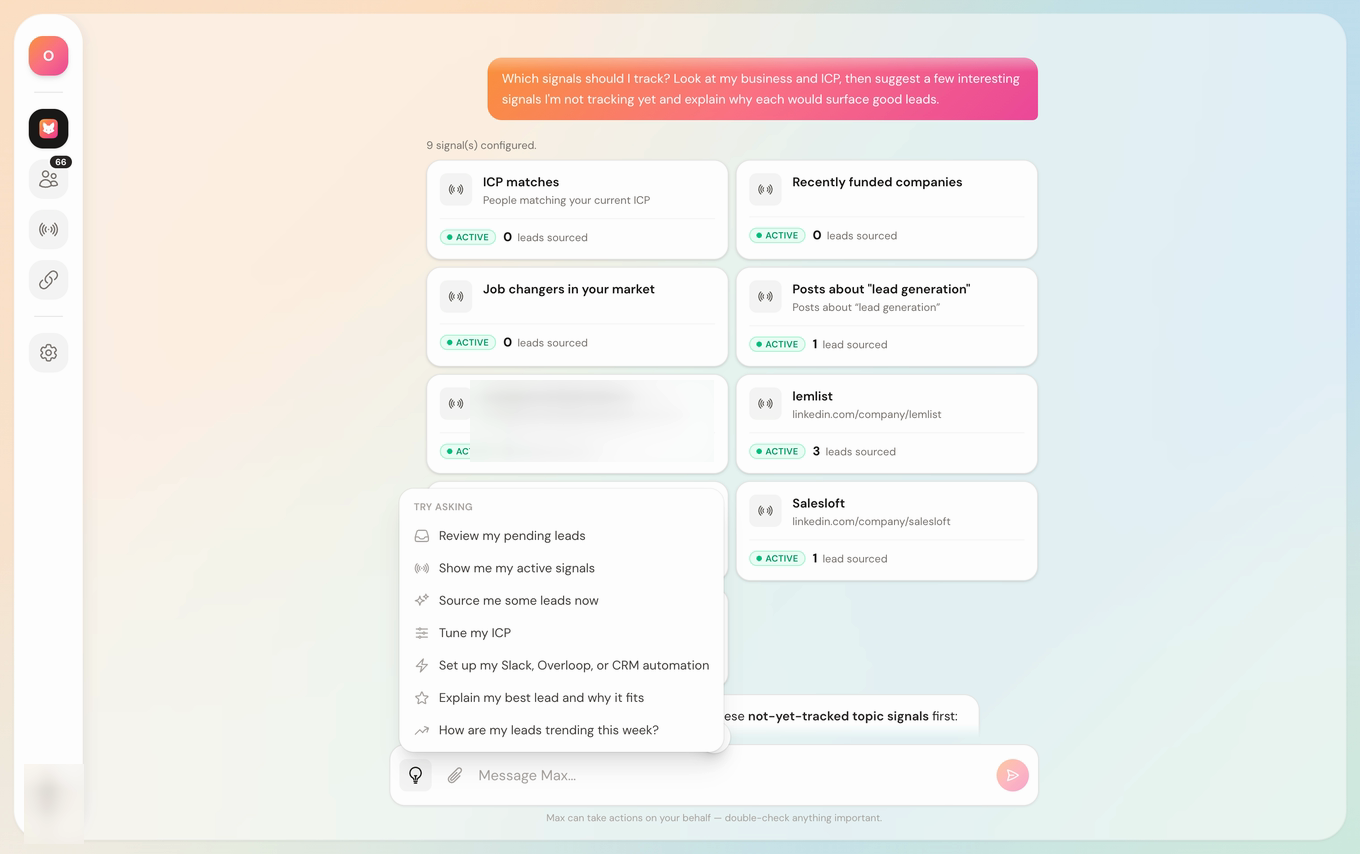
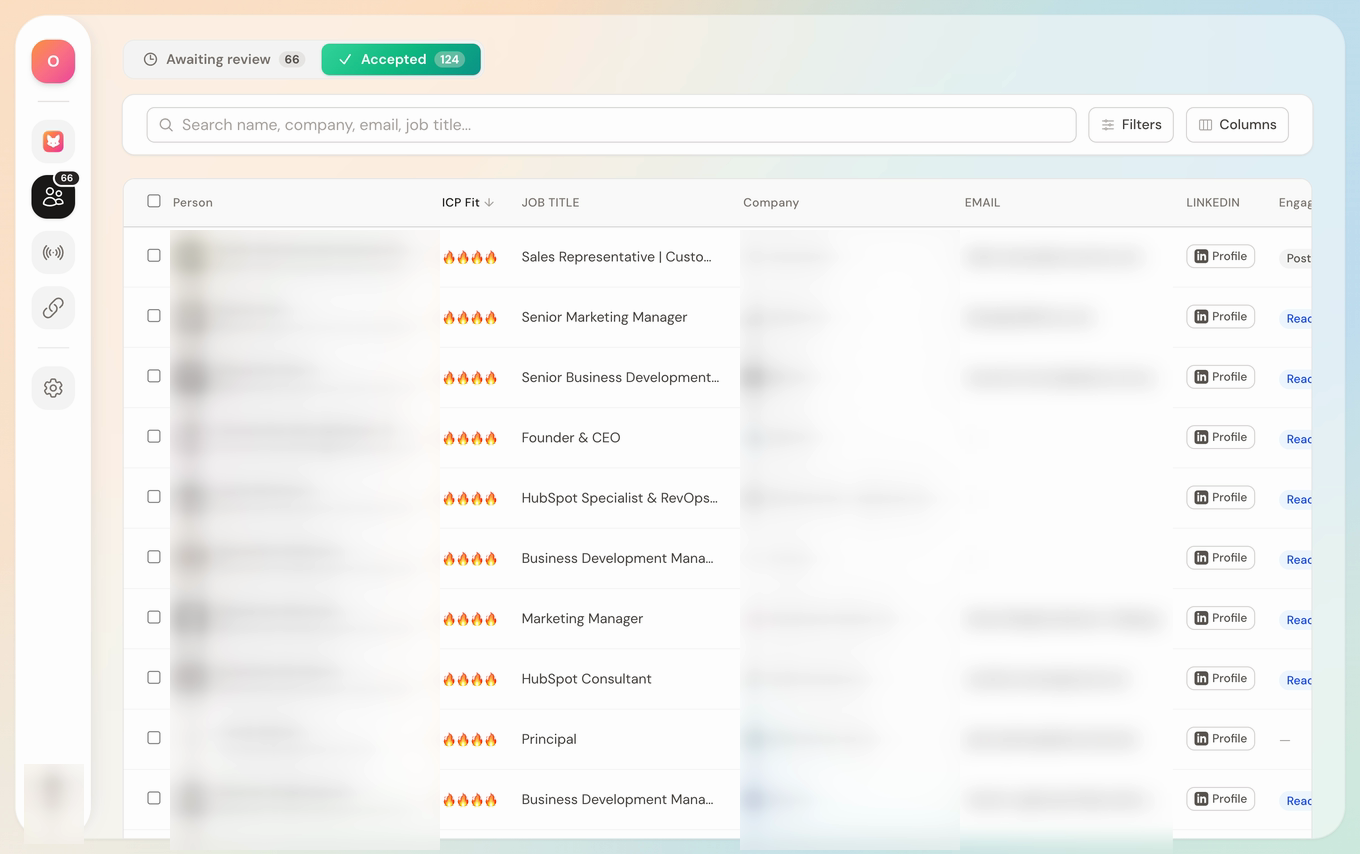
From monitored signal to accepted lead
The signal stays visible upstream; a human still decides which surfaced leads move into the accepted queue.
How Max would operate the job change outbound loop
Signal Max verified
For job change outbound, Scout opens one case with this inspectable input: A target buyer starts a new role at a best-fit account.
Scout gathers a target buyer starts a new role at a best-fit account, preserves the source, and exposes unresolved fields rather than completing them with guesses.
What Max refused to assume
For job change outbound, Max does not assume that an available input deserves repetition, outreach, or scale. The team applies the field note rule instead: Use 0 for absent, 1 for unclear, and 2 for operational. Do not run the playbook when the input, accountable owner, evidence boundary, or stop condition is missing. Repeat only the part supported by the recorded buyer and commercial outcome.
Why it ranks here
For job change outbound, the illustrative account clears the playbook's evidence boundary, has a named owner, and supports a useful output: Buyer-situation brief.
Decision trace: Strategist applies the playbook and records a Launch decision with its failed or passed gate.
Recommended next action
A review-ready first-touch draft that gives the buyer buyer-situation brief before asking one easy-to-correct question about job change outbound.
Closer prepares a concise draft that delivers buyer-situation brief. The draft remains unapproved.